| |
Notable Old Conways
Senior Officers RN, Army & RAF
Other Notable Conways
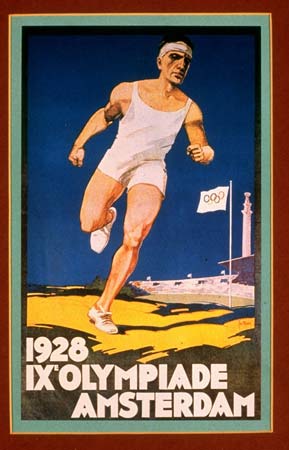
International Sportsmen
Conway Gold Medal Winners
Chief Cadet Captains & Kings of the Woods
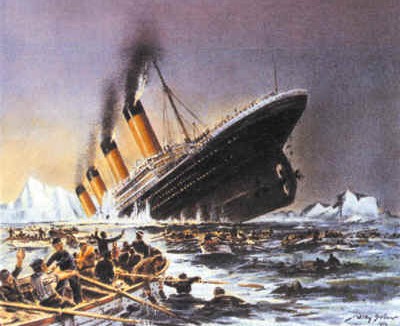
Conway & Titanic
Senior
Officers RN, Army & RAF
Conways
achieved very senior ranks in all three armed services, and in the
Royal Navies of several Empire/Commonwealth countries.
Navy - Admirals
Rear Admiral Harry Mervyn Kemmis Betty (1882-84) promoted late in 1921.
Rear Admiral (E) Frederick Stewart Billings FS CBE (1913-14)
Vice
Admiral D S Boyle RCN (1939-40)
Vice
Admiral Sir David Brown KCB (1941-45)
Vice Admiral Leslie Newton Brownfield CB CBI (1915 -17) Naval Attaché to Thailand 1939-41, commanded
battleship Ramilles, later President of the Admiralty Interview Board,
Admiral Superintendent, Devonport.
Admiral Sir Sackville Hamilton Carden KCMG (1868-70)
Vice
Admiral Sir David Clutterbuck
DSC KBE CB (1926-29)
Admiral Collins
Vice
Admiral Sir Archibald Day KBE CBE CB DSO (1913-14).
Vice
Admiral T B Drew CB CVO OBE (1902-03)
Rear
Admiral J P Edwards CB LVO (1942-44)
Rear Admiral Douglas Henry Everett CB CBE MBE DSO (1911-13)
Admiral
Franklin (cheating a little as he was Conway's 4th Captain Superintendent and promoted on retirement)
Rear
Admiral CB Mayo CB CBE (1923-25)
Rear
Admiral G D Moore CBE RAN (1910-12)
Vice Admiral Sir Charles E Morgan DSO CB KBE (1902-05) Commanding Reserves from December 1945
Rear Admiral Ronald Gordon Murray CBE CB (11-12)
Rear Admiral H S F Niblett (1865-66). The first OC to achieve Flag Rank
Admiral
Sir Richard Peirse (1873-75)
Admiral
Sir Charles Thomas Mark Pizey KBE, CB, DSO DL RIN (1912-15)
Rear
Admiral N E Rankin
CB CBE (1955-58).
Admiral Sir A R Rattray CB KBE RIN (1906-08)
Vice
Admiral Sir C W R Royds (1890-92)
Rear
Admiral KM Saul
RNZN CB (1943-44)
Rear
Admiral R W Timbrell
CF DSC CD RCN (1935-37)
Vice
Admiral Sir Peter Woodhead KCB (1954-57) Deputy Supreme Commander Atlantic.
Navy - Commodores
It should be noted that until 1992, Commodore RN was not a rank but a senior appointment. From 1992 it formally became a RN rank.
Commodore H J Anchor RN (1909-11) Comodore Ocean Convoys circa 1939-42
Commodore D T Ancona RN (1951-53)
Commodore D A Casey RNR (05-07) OBE CBE DSC (WWI) DSO (WWII) ADC Commodore of Ocean Convoys in 1940
Commodore (Coastal Convoys) Lt Cdr Chambers (18-20) RNR
Commodore J P Dobson DSC RD RN (1915-17)
Commodore J C K Dowding CBE (1904-06).
Commodore E Frankcom OBE RN (18-20) service in WWI East Coast convpys
Commodore Richard Garstin
OBE, CBE CdeG RIN (1900/02) returned from the Retired List of the
RIN in 1942 to become a Commodore of Ocean Convoys in 1942.
Commodore Herbert Joseph Giles OBE RD RNR (1897-99)
Commodore
C G Greenfield GG RD RN (1943-45)
Commodore Richard Thomas Hale (35-38) OBE RNZN RNR
Commodore A Hambly DSO RN (1881-83)
Commodore George Hunt DSO DSC RAN (1930-32)
Commodore (Coastal Convoys) Lt Cdr K J T Hutchins RNR
Commodore Henry Douglas King (1891-93) PC CB CBE DSO VD RNVR, Minister of State
Commodore H R Lane
RNR OBE (14-16) Commodore of east Coast convoys during
World War 2. He was also Marine Superintendent of Cunard and Elder
Dempster, and ADC to King George V1 in 1951
Commodore MGB Manning AFC FCMI RN (1962-66)
Commordore Mare CIE RIN (1905-07)
Commodore Geoffery T Marr DSC RD RNR (1922-24)
Commodore William Marshall
RNR CB DSO (1889-91) The first Old Conway to hold the apointment of Commodore
RNR. He was an ADC to the King (including at the opening of Gladsteon Dock) and also Commodorere of White Star line
from January to May 1930.
Commodore C E Mason RN (1914-16)
Commodore M A Medland RCN (1928-30)
Commodore Thomas Maxwell Stuart Milne-Henderson CIE RIN (1903-5)
Commodore
I I B Morrow RCN (1937-39)
Commodore C B Osborne RD RN (1908-10)
Commodore R V Peel RD RN (1890-92)
Commodore (Coastal Convoys) Cdr C W C Pinkney RNR
Commodore (Coastal Convoys) Cdr W H Poole RNR
Commodore C W R Royds
CMG RN (1890-92) in command of the RN Barracks at Devonport. Previously
1st Lt of Scott's Discovery and later Deputy Commissioner of
the Metropolitan Police.
Commodore J F Ruthven FRGS AINA RNR (1864-65)
Commodore (Coastal Convoys) Lt Cdr S Scallon (18-20), RNR
Commodore G E Sutcliffe RNR (1889-01) Commodore Ocean Convoys
Commodore R G Thelwell OBE RD RNR (1911-13) promoted to Cmdr in 1951. Also ADC to HM The king 1947-49.
Commodore Edward Unwin VC CB CMG (1878-80)
Commodore J Whayman CBE DSC RD RNR (1920-21)
Commodore S N White RD RNR (1899-01) Also served in Booth Line fro 37 years. RNR ADC to he King
Army
Major General G W Barber CB CMG DSO Australian Army (1882-4)
Hon.
Brigadier General Robert Herbert Wilfred Hughes RE CB, CSI, CMG, DSO, RD (1885-6)
G Nicholson (1887-88) was promoted Brigadier General in 1919.
Air Force - Air Marshalls
Air
Chief Marshal Sir Richard E C Peirse KCB, DSO, AFC RAF
(1905-07)
Air Vice Marshall H G White CB CBE RAF (1910-12)
Air Vice Marshall Sir Geoffrey Worthington (1917) RAF
Air Vice Marshall Sir William M Yool CB CBE (1908-10)
Air Force - Air Commodore
A Air Commodore Charles Frederick Hallyburton Grace StO RAF MiD (1918-1920
Air Commodore David Neal Roberts CBE AFC RAF (1920-22)
Air Commodore Frederick John Rump CBE RAF (1927-9)
(Acting) Air Commodore Theodore Quintus Studd TQ DFC DL RAF (1909-11)
Back to Top
Commodores
Of Shipping Companies (Conway Years in brackets)
Bengal Pilot Service
Captain J H Colquhoun (1923-25)
Bibby Line
Lt Cdr G H Harris RNR (1868-69) completed 5 years as Commodore when he retired in 1918 after 48 years at sea, 32 in command.
Booth Steamship Company
Commodore Jackson Whayman CBE DSC RD RNR (19-21) years as Commodore not known
British India Steam Navigation Co
Captain D Gun-Cunninghame (15-17) ?? to 1961
Captain J Cavenduish-Horner (1910-13) From Oct 1954 to June 1955
British Tankers
Captain Vivian Funge Smith (1921-2)
Canadian Coastguard Service
E S Brand (32-34
Canadan Pacific
E W S Roberts (20-22) Retired as Coomodore in 1967
W E Williams (1939-41)
Ceylon Imperial Lighthouse Service
G Stapleton (1878-80)
Clan Line
Francis J Stenson (1892-99) ADC RD 1939-40
H J Anchor (09-11) OBE RNR 1956 to 58
Cunard Line
Captain Sir Robert Beaufin Irving (1890-92 approx) KB, OBE, RD, RNR 1877-1954
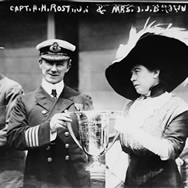
Captain Sir Arthur Henry Rostron KBE RD
RNR (1885-6)
Captain G T Marr (1922-24)
Commodore R V Peel RNR (1890-92)
Commodore Robert G Thelwall (11-13)
Captain W E (Bil) Warwick CBE RD RNR (26-28) (note he insisted on Bil not Bill)
Captain W E (Ron) Warwick (56-8)
Captain J E Woolfenden (24-26)
Mogul Line
Captain A George Roberston (1898 - 1900)
Neilson Bulk Carriers
Mike Rowe
(1957-60)
New Zealand Shipping Co
Their equivalent to Commodore was simply called "Senior Master". In 1975 it was
Frank Graham Bevis (22-24)
Nigerian Marine
Captain R H W Hughes CB CSI CMG DSO RD RNR (85-87) He was also an honorary Major General!
OCL
Captain Robert Royan (44-46), The line's first Commodore
Orient Steam Navigation Co
Capt J J Ruthven (1864-65). Was Commodore for 23 years to 1911! By his retirement he had sailed at least 2,250,000 miles.
Pacific Steam Navigation Co
Capt J C Evans RNR (17-18). Years as Commodore ?? to 1964
Palm Line
Cap J F Pugh (26-27) certainly in 1969
P&O Shipping Co
Captain WL Brown (1865-67)
Captain E H Gordon (1865-67) was Commodore for several years to 1915.
Captain G L Langbourne (1865-67)
Capt G M Montford (1876-78) Feb 1918 to 1921
Royal Fleet Auxiliary
Cdr
Henry Owen L’Estrange (1926-28) DSC RD RNR. In 1971 he was appointed
Commodore of the R.F.A. He was due to return to Ireland in February
1973 to retire to his home in Sligo, had he not died in December 1972
on board his ship RFA Stromness in the Singapore naval base.
Captain Gordon Butterworth (42-43) was head of the RFA from 1981 to 1985 (Including the Falklands War) when he retired.
Royal Mail Lines
Captain E W E Morrison 1926 to 1938
Captain D A Casey OBE DSO DSC (05-07) ?? to 1949
Captain G A Bannister OBE (1908-11) from 1951 to 1953
Unicorn Fleet
Mike Robinson (49-51)
White Star Line
Commodore
Herbert J Haddock, CB, RD, RNR (1875-77), see entry below. Years as
Commodore not known but The Cadet confirms he held the post. He retired
in 1931 aged 70 so it is likely he immediately proceeded Marshall.
1930 January to May Commodore William Marshall CB DSO RD RNR (1889-91)
he died in post. He was also the first man to hold the apointment of
Commodore RNR. He was an ADC to the King. There is an obituray here
1930 to ?? Commodore H Douglas King CB CBE DSO VD MP RNVR (1891-93)
Other Notable Conways
Many other Conways have gone to become
well known names and international celebrities. We welcome suggestions
and links for this section, please contact us with details using this
Feedback link.
Cyril Abraham (1928 - 30)
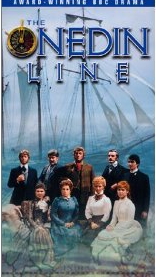
Novelist and Playwright. Writer of the
famous television series the "Onedin Line" and the "Blazing
Ocean" dedicated to all Conways who lost their lives at sea during
the 2nd World War
http://www.imdb.com/title/tt0074035/
|
|
Alfred Wright Adcock (1898-9)
He was born in 1885 in Nottingham and joined Conway at 13, and on leaving joined the Merchant Marine. A second
officer of the Indrabarah (Tyser Line) he performed two rescues when
the vessel went aground on the Rangitikei coast (NZ) in 1913, and as
a result was decorated by King George V at Buckingham Palace, and also
received rewards from the Royal Humane Society and the Liverpool Shipwreck
and Humane Society. News story
During WWI he was First Officer
on troop ships. He left the Merchant Navy in 1923 and emigrated to New
Zealand, where he took up farming. He gave this up due to ill health,
and subsequently worked for the City Council of Palmerston North. He
retired in 1955, and died in 1957.
|
|
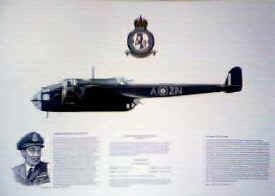
Wing Commander Robert S Allen DSO, DFC
(28-31)
Born in Manchester in 1914, Robert Allen
was educated at Westfield High School, Manchester and HMS Conway and
joined the RAF as a pupil pilot in 1935. He was promoted to squadron
leader in 1939. During June 1940 whilst en-route to bomb a target, he
observed an He III and despite "bad weather conditions and intense
darkness" he maneuvered
his aircraft to enable Sergeant Williams (WOP/AG) to fire at the enemy
aircraft and shoot it down. Soon after the same tactics were employed
against a Ju87 with the same result. Squadron Leader Allen then continued
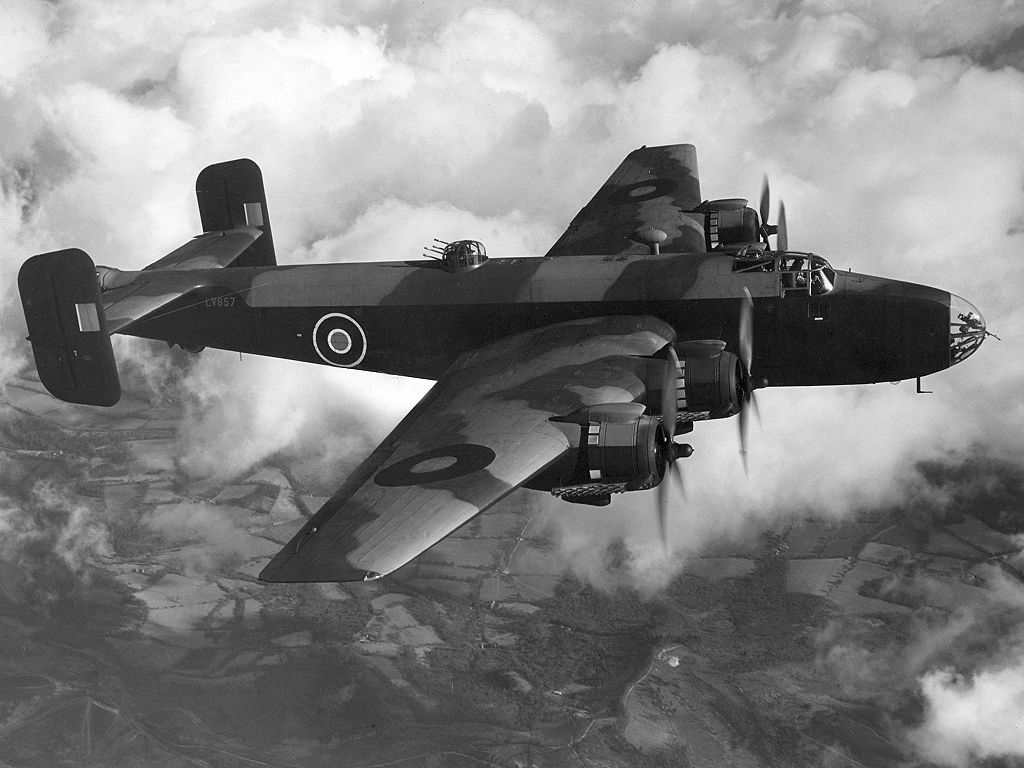
to his objective and bombed the target successfully. He was flying Hampdens
with No.49 Squadron at the time, and was awarded the Distinguished Flying
Cross (DFC) for this action. The award of the bar to his DFC followed
in October 1940 while still with No.49 squadron. Following promotion
to Wing Commander, he then went to No.106 Squadron at RAF Coningsby
and on 24th July 1941, whilst flying AE19Wing Commander Allen led a
daylight attack through heavy anti aircraft fire and fighter opposition
against the German battle cruiser Gneisenau, which was in dry dock at
Brest. For his leadership on this operation he was awarded the
Distinguished Service Order (DSO). After leaving No.106 squadron, he
served on the Air Staff Mission in China between 8th July 1943 and mid
August 1945. On 13th February 1945 he was awarded the Cloud and Banner
decoration (Special Rosette) an award confirmed by the President of
the Nationalist Government of China. After leaving the RAF, he became
a publican. He died in 1982.
Buy the print
|
|
Lt Henry Warington Smyth
Baden-Powell RNR KC Admiralty
Court (1861- 1864, cadet number 187),
Always called Warington, He was the eldest brother
of the more well know Lord Baden-Powell. Warrington was the founder of the Sea Scouts
http://www.scoutingmilestones.freeserve.co.uk/seascouts.htm
His
brother said of him: "It was under his guidance that I, when a
youngster, began my Scouting as a Sea Scout. He
was himself both a sailor and a boy at heart and so his teaching told.
I have never forgotten those breezy times and the things that I learned
under him have had their life-long value for me. Since the first edition
of this book its author has passed to Higher Service, but to the end
he remained as he had lived-a sailor and a boy. It was largely thanks
to his interest in boys and in seamanship that Sea Scouting became popular
in the early days of our movement, so that when the Great War came suddenly
upon the nation the Sea Scouts proved able at once to take over the
duties of the Coastguards when these were called away to man the fleet.
Thus the Scouts watched our Coasts from John O'Groats to the Land's
End during the whole period of the War. Also they provided a considerable
contingent of signallers, cooks and bridge boys to man the auxiliary
fleet. They
so acquitted themselves that at the end of the war they received the
public thanks of the Admiralty and of His Majesty the King himself."
Early in his career he qualified as a Master Mariner and was commissioned a Lieutenant in the Royal Navy Reserve. Warrington was also a
great exponent of the sailing canoe or canoe yawl. In
1871, at the age of 24, he paddled and sailed a canoe on a cruise
around the Baltic Sea that included stops in Germany, Denmark and
Sweden as described in his book, Canoe Travelling, published in 1871.
|
|
W.
H. Baker (years
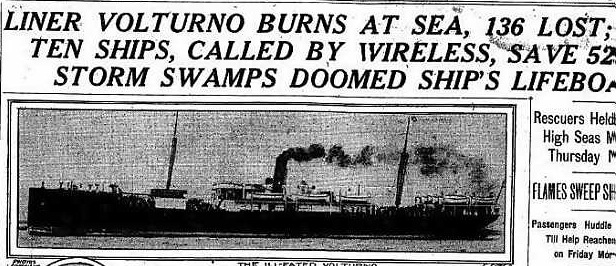
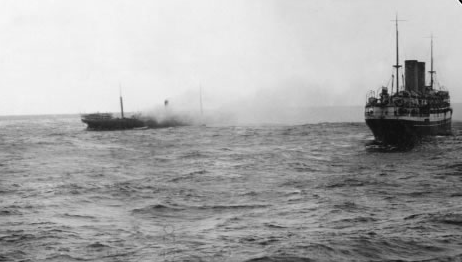
not known) Burning
of the Volturno (extracted from the Liverpool Mercury, Oct 18th
1913)
"The awful tragedy
in mid-Atlantic by which 136 persons lost their lives through the burning
of the emigrant ship Volturno [3602 tons] has startled and horrified
the public almost as much as did the awful Titanic, 18 months ago. The
heavy death-toll is due to the fact that the fire broke out during a
raging-tempest, so that although the Volturno had more than sufficient
boats to carry those onboard, they could only launch with a grave risk
of being dashed to pieces or swamped when in the water. That so large
a proportion of those on board were rescued was due to the fact that
she had wireless installation. Her pleas for help were heard widely
over the Atlantic, and 11 liners immediately converged on her but heavy
seas effectually prevented rescue work. Volturno launched 7 boats, the
first boat swung under the stern and the propeller literally smashed
her to matchwood, cutting the unfortunate occupants to pieces. 3 more
were dashed to pieces as she rolled in the great seas, 2 reached the
water safely but were swamped, killing all onboard. Under such terrible
conditions rescue work seemed impossible. Many attempts were made to
send rescue boats but all failed. Volturno's master became desperate
and called for volunteers to show the other captains that it was not
impossible to launch their boats. One got as far as the Gosser Kurfurst,
but the boat was smashed and was almost lost. Volturno's master sent
a final desperate message, "My God, Can't stand this long. Our boat
has gone. Send me some boats." The Captains of the other boats replied,
"We have tried our best. The sea is too heavy and no boat could live
in it."
Baker (2nd Officer of the Leyland steamer Devonian) lauched
a boat and eventually managed to get a lifeboat alongside. He later
frecalled: "Early in the morning following our arrival on the scene
of the disaster I determined to make an attempt to reach the burning
vessel, 'Neck or nothing, let us go' I said to the men, and a crew of
eight agreed to go out on the boisterous sea, and amidst perilous conditions.
When we were near to the vessel we could see there would be a rush by
those on board to escape. We called to those in charge to keep back
the men, who were pressing forward, and to let us save the women and
children first. Officers used their fists to drive the men back, and
some of them went down like ninepins. The work was carried out with
the most considerable danger. Sparks were flying, the heat on the sides
of the vessel was intense, and the smoke was blinding. From time to
time some relict of the fire, such as a disjoined derrick, or piece
of the funnel would tumble into the water, and might have easily injured
rescuers and rescued alike. We could see the smoke coming up between
the beams of the deck, and the men were almost standing in flames. During
the night the scene was horrible. Shrieking was continuous and several
of the women held up their babies and outlined them in the blaze, and
begged of us to come and rescue them." Although Baker made several more
rescue trips no other boats dared make the same journey until a tanker
appeared and spilled oil onto the raging waters.
He
was awarded the Marine Medal of The Liverpool Shipwreck and Humane
Society, the Board Of Trade Sea Gallantry Medal and the medal of The
Life Saving Benevolent Association of New York. He was also presented
with a solid silver tea service by Leyland Line.
|
|
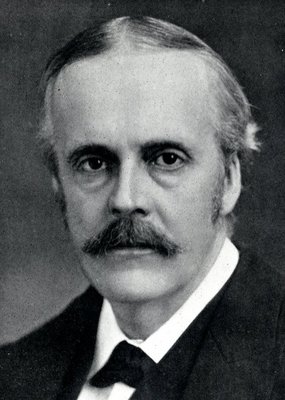
Earl of Balfour (1941-44)
The 4th Earl of Balfour, who died on June
27 aged 77, was once the only viscount to be an able seaman in the Merchant
Navy.
In the pre-1999 House of Lords, he was
also known as the bane of the parliamentary draftsmen. This was because,
being dyslexic, and hence often having to consult a dictionary, he scrutinised
each bill with absolute objectivity, detecting mistakes that skilled
proofreaders had missed.
On one occasion he raised 53 objections
to a government housing bill, chiefly on grounds of misspellings and
typographical errors, but also citing graver flaws such as transposed
sentences. Fifty of his objections were accepted - believed to be a
record - and the Bill withdrawn. The government minister who had introduced
the Bill remarked that, though he congratulated His Lordship, it was
through gritted teeth.
Gerald Arthur James Balfour, the son of
the 3rd Earl of Balfour, was born on December 23 1925. The earldom was
created in 1922 for the former Tory Prime Minister Arthur Balfour, Gerald's
great-uncle. Arthur Balfour had succeeded his own uncle, the 3rd Marquess
of Salisbury, in the premiership in 1902 and held it till 1905. The
Balfours before that had been lairds for generations of Balbirnie, in
Fife.
Gerald was educated at Eton and the training
school HMS Conway. Gerald's father had also hoped to join the Royal
Navy but, he too being dyslexic, had misspelled his forename and surname
on his entrance paper, and was not admitted.
During the Second World War Gerald served
in the Merchant Marine. On his first voyage he was torpedoed by the
Japanese, and spent a week in an open boat in the Indian Ocean before
being rescued.
On the death of his grandfather four months
before the war's end, Balfour inherited the courtesy title of Viscount
Traprain. He continued in the Merchant Navy after peace came, serving
as deck-hand aboard the four-master 3,200-ton barque Pamir in a voyage
carrying tallow, wool and clothes from well-wishers in New Zealand to
Britain's "Displaced Persons" - as the homeless were then
called. At that time he wore a beard and was known to his shipmates
as "Gerry".
Among his later distinctions, Balfour
was President of the Cape Horners, originally an association exclusively
of people who had rounded Cape Horn before the mast, that is to say
as ordinary crew members of tall ships. (Latterly, yachtsmen have been
admitted.)
In his Merchant Navy days Balfour was a
member of the New Zealand seamen's union. By the late 1960s, he was
more sympathetic to capitalism, and was chairman of a Scottish bottled
water company exporting to places as far away as South America. In June
1969 he became chairman of Bruntons, a Musselburgh steel wire manufacturer,
but resigned eight months later after a boardroom dispute. He also farmed
in East Lothian, where lay the family estate of Whittinghame, near Haddington,
and during the 1960s and early 1970s sat as an East Lothian County Councillor.
In later life Balfour turned increasingly
to public debate. In the House of Lords he spoke on soil erosion in
the Middle East, urging the government to enlist Israeli politicians
and Zionist funds to fight it. There was a dual family element in this:
his aunt, Lady Evelyn Balfour, had founded the Soil Association; moreover,
that Israel existed at all was largely due to his great-uncle, the 1st
Earl, who as Foreign Secretary in Lloyd George's Coalition Government
had, in 1917, issued the Balfour Declaration, announcing support for
a Jewish national state.
Gerald Balfour also aired his views in
The Telegraph's letters' page. These opinions were so wide-ranging as
would provoke today the charge "unfocused"; yet they were
largely sensible. In the 1970s he criticised the Wilson government's
public housing policy. He argued that the 1965 and 1974 Rent Acts had
deliberately reduced the availability of privately rented accommodation,
obliging tenants increasingly to take what was offered by local authorities
and housing associations, yet with no security of tenure.
He had a knack of anticipating the future.
In the early 1980s he was urging that telephones be metered, so that
users could judge how big a bill they were running up. In the mid-1980s
he called for reform of the rates, arguing that the local authorities'
role in providing services should be reduced and central government's
increased. A few years later, along with erosion of councils' powers
by Whitehall, came the Poll Tax.
In the late 1990s Balfour was on a four-man
Parliamentary Commission in Scotland that had to adjudicate in a dispute
between Glasgow's Burrell Collection trustees and Glasgow Council's
museum director. The latter wanted to be able to exchange items from
the Collection with those of other places to boost falling attendance
figures.
The trustees feared that breaking the terms
of the bequest, which forbade such dispersals, would put off potential
future donors. All four Commissioners were hereditary peers, which enraged
progressives. That the 4th Earl of Balfour was also a Freemason, and
had called the handgun ban after the 1996 Dunblane Massacre a "news-media-inspired
panic", damned him further in liberal circles.
Balfour was, in fact, far from a diehard
Conservative. The Bill he caused to be withdrawn was one put forward
by the John Major administration. Nor was he opposed to the people's
will: in one of the last debates in the old House of Lords before most
hereditaries were ejected, he stated that it was not for their lordships
to oppose Scottish devolution since it had been voted for. Yet he was
certain the Bill needed amendments and improvements.
|
|
Kyrle Bellew (1866-67)
His record sheet says he left Conway "Before 2 years" to
join a ship (not uncommon in those early years) and that in 1870, after
3 years at sea he he became an officer the Austrian army for a while. It is therefore assumed that he left Conway in 1867 and joined British Monarch as a Broker's Officer and later moved to British Scepter. He had a short but very eventful three years at sea. During
one voyage to the Far East he was swept overboard in the Bay of Bengalan, was picked up for
dead but survived. Some years later he was washed
overboard in the English Channel, picked up for dead again, but once more survived.
He spent a short while ashore before the sea called him back. This time
his ship was burned and he spent three weeks in an open boat. He then
spent some time in the Austrian Army, presumably some distance from the
sea. He immigrated to Australia where he had a short career as a public
speaker. He was swept up in the New South Wales gold rush but left
stranded. Described as having, “a fine appearance and a singularly
beautiful voice”, he formed a troupe of actors and worked his way back
to Melbourne. Now, at the grand age of 19(!), he decided to become a
full time actor. One of his old sea captains allowed him to work his
passage home – the ship was nearly lost rounding Cape Horn during
exceptionally icy conditions. 10 days after arriving back in London he
was on the stage. He became a member of Henry Irving’s troupe based at
the Lyceum. In 1884 he teamed up with another Old Conway, Frederick
John Fagus, who was a celebrated novelist and playwright under the pen
name Hugh Conway. His novel Called Back was, “one of the most
remarkable successes of the last 100 years”. It proved so popular he
turned it into a stage play and it ran at the Prince of Wales Theatre
from 20th May 1884 for the rest of the year. Kyrle Bellew played the
lead. Bellew eveentually formed his own successful repertory
company and toured the world for 10 years before returning to Australia where
he became involved in some successful mining ventures. He crossed the bar on
2nd November 1911 in Salt Lake City. More details are here.
|
|
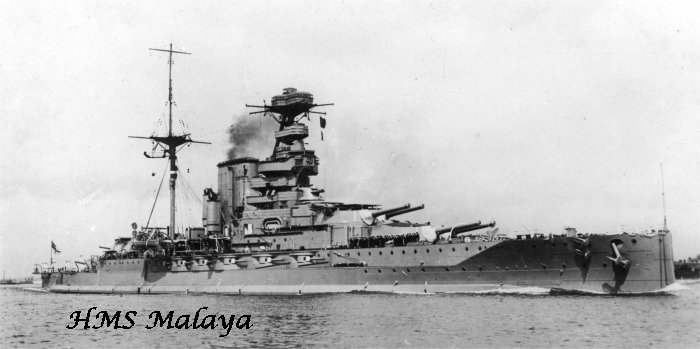
Rear Admiral (E) Frederick Stewart Billings FS CBE RN (1913-14)
Joined
RN in 1914; World War I 1914-1918; World War II 1939-1945; Fleet
Engineer Officer on Staff of Commander-in-Chief, HMS Malaya,
Mediterranean 1945-1947; Assistant Engineer-in-Chief (Personnel),
Admiralty 1947-1948; Fleet Engineering Officer (Submarines) 1948-1950;
Manager, Engineering Department, HM Dockyard, Portsmouth 1950-1954;
retired 1954; director of engineering firm 1956-1962. Awarded Commander
of the Order "Al Merito" by President of the Republic of Chile for
services to the British Naval Advisory Staff, Chile. Gazette 40298 of
12.10.1954 shows him as having the CBE and placed on the Retired List.
|
|
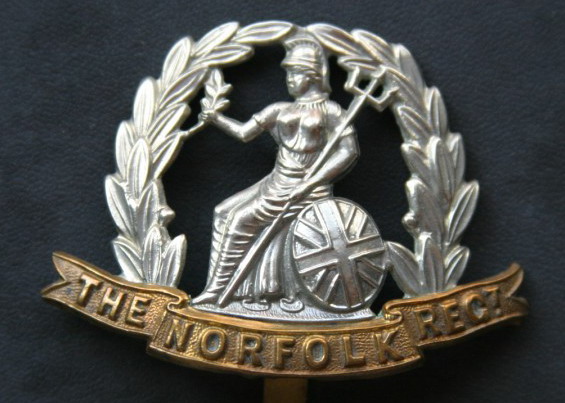
Lt
Col WH Brinkley (1929-31)
Green
blindness prevented a naval career so Bill Brinkley entered Sandhurst
in 1932 and was commissioned to the Norfolk Regiment in August 1932,
joining the 2nd Battalion in Devonport prior to 6 years service with
the 1st Battalion in India. He served during Northwest Frontier operations,
then in Delhi and Bangalore. After attending Staff College Camberley
he rejoined the 1st Battalion in Scotland and trained for the D-Day
landings in Normandy. He was wounded on a patrol in Normandy and was
evacuated to England. He trained recruits at the Regimental Depot Norwich
and became a GSO II Instructor at the Staff College, Quetta in March
1945. His peacetime service took him to less peaceful places. Evacuated
from India on Independence in 1947, he rejoined the Battalion for service
during the airlift of Berlin, followed by a period in Hong Kong when
the New Territories were threatened by the Chinese Army. When
this threat receded, he was posted to Seremban, Malaya for anti-communist
operations! He became 2IC of 1st Battalion The Suffolk Regiment in Trieste
and led its families during the evacuation to Wuppertal due to trouble
between Yugoslavia and Italy. Later he moved to the Headquarters of
the British Commonwealth Force Korea in Kure, Japan. He was appointed
to command 1st Battalion The Royal Norfolk Regiment for anti-Eoka operations
in Cyprus. At the end of Eoka activity the Battalion moved to Iserlohn,
Germany where he relinquished his tour of command.
|
|
The Brooke Smith Dynasty (1893-1971!)
The Brooke Smith family are Conway legends with five family members, over three generations, serving as cadets.
Captain
Louis Brooke Smith RNR (1893-95) was the patriarch. He sailed in
clipper ships with Carmichaels & Stewarts obtaining his extra
master’s square rigged certificate in 1903. He served in the Boer War
and the first world war. He was a founder member of the Honorable
Company and marine superintendent of the Meteorological Office for 19
years and organised the system of weather observations by ships at sea
and the shipping weather bulletin. He was elected a Younger Brother of
Trinity House in 1919. His eldest son John (25-27), fifth son Frances
(34-36) and sixth and youngest son Guy (44-46) as well as grandson
Bruce (61-63) all followed him to Conway.
John - ‘Brookie’ was the Ship’s second longest serving officer, joining in 1940 and retiring in December 1971 (Mr
George Hunt who retired due to ill health in April 1916 with 36 years
service was our longest serving memeber of staff. John was born on 14th
February 1911 at Fretwell in Yorkshire. He left Conway as a senior
cadet captain with an extra certificate. He was appointed Midshipman
RNR and joined Alfred Holt & Co, later moving on to the New Zealand
Shipping Co. By 1939 his eyesight deteriorated to such an extent that
his sea-going career was over, however as a Lieutenant RNR he was
mobilised during the war and transferred on a short-term loan to the
Ship. The loan lasted 31 years. “As a divisional officer he was superb.
Very smart in dress, encouraging, very strict but always fair. His
austere countenance hid a great shyness but he gained the greatest of
respect.” He had an extraordinary knack of appearing at the scene of
any crime or misdemeanour when you least wanted him to, hence his
earlier nickname of ‘Spooky’. He wore round glasses and a smile never
seemed to be far from his face. “He was slow to rouse, almost gentle
most of the time but very forceful when he detected slackness or ill
discipline.” Captain Hewitt promoted him from divisional officer to
chief officer and arranged for him to be awarded the honorary rank of
Lt. Cdr. RNR. He was in the Ship for her transits from the Mersey to
Bangor in 1941, from Bangor to Plas Newydd in 1949 and from Plas Newydd
in 1953 when the Ship was lost. He found the loss deeply distressing
and he did more than any person to ensure that the very best of Conway
traditions continued. He served as chief officer until 1969 when
Cheshire abandoned the title and he was obliged to become a
housemaster. He served faithfully but was unhappy about the changes and
the loss of long held traditions. He loved the old Ship and Conway was
his whole life. He retired at the end of 1971 to Brook Cottage in
Haskerton. He died on 23rd December 1990 and was buried in the local
churchyard
Lt.
Cdr. F.H. Brooke Smith GC RD RNR (34-36) was a cadet in the Ship on the
Mersey. A Sub-Lieutenant Royal Naval Reserve he was torpedoed in the
second world war and then volunteered for mine disposal duties. In
December 1940, having previously defused 16 mines, a mine fell on the
fire-float Firefly in the Manchester Ship Canal, landing inside the
deck locker alongside the engine-room. It failed to explode. When
Sub-Lieutenant Brooke Smith arrived to deal with it, he found it was
firmly wedged, but by using a rope he was able to pull the mine
slightly clear of the engine-room casing and then, lying on the sloping
engine casing, head downwards, he managed to place a safety gag in the
bomb-fuse. The clock of the fuse then started to tick, but he stayed
where he was and finally managed to stop it before the inevitable
explosion occurred. He had dealt successfully with many unexploded
bombs, but this was the first time that he had used a safety gag on a
bomb-fuse and he had to do so in most difficult circumstances as he was
compelled to work by touch, without being able to see the bomb fuse at
all, and his chances of succeeding and of escaping with his life were
regarded as very small. He also dealt with mine in allotments 50 yards
from Short & Masons aircraft factory in Macdonald Rd, London.
Later, he participated in training divers for Suez Canal clearance.
After the war he was a senior officer in passenger lines between New
York and Bermuda. He was killed in a road accident near his home in
Woodbridge. His medals are on display in the Imperial War Museum in
London.
Guy
(44-46) was a cadet in the Ship at Bangor at the same time that his
elder brother John was an officer. One evening as duty officer John
read “The following cadets are on slack party – Adams , Baker, Brooke
Smith…” a great cheer went round the Ship. Both brothers took this in
good heart. After Conway, Guy went to sea but later joined the British
South African Police in Rhodesia before retiring in South Africa. Bruce
(61-63) was a cadet in the Camp when uncle John was chief officer but
by now Brookie must have been accomplished at dealing with family
members as cadets. Bruce was senior cadet captain focsle in the summer
term of 1963 before going to sea with the Royal Mail Line. He later
joined the RAF becoming an instructor teaching pilots to fly.
|
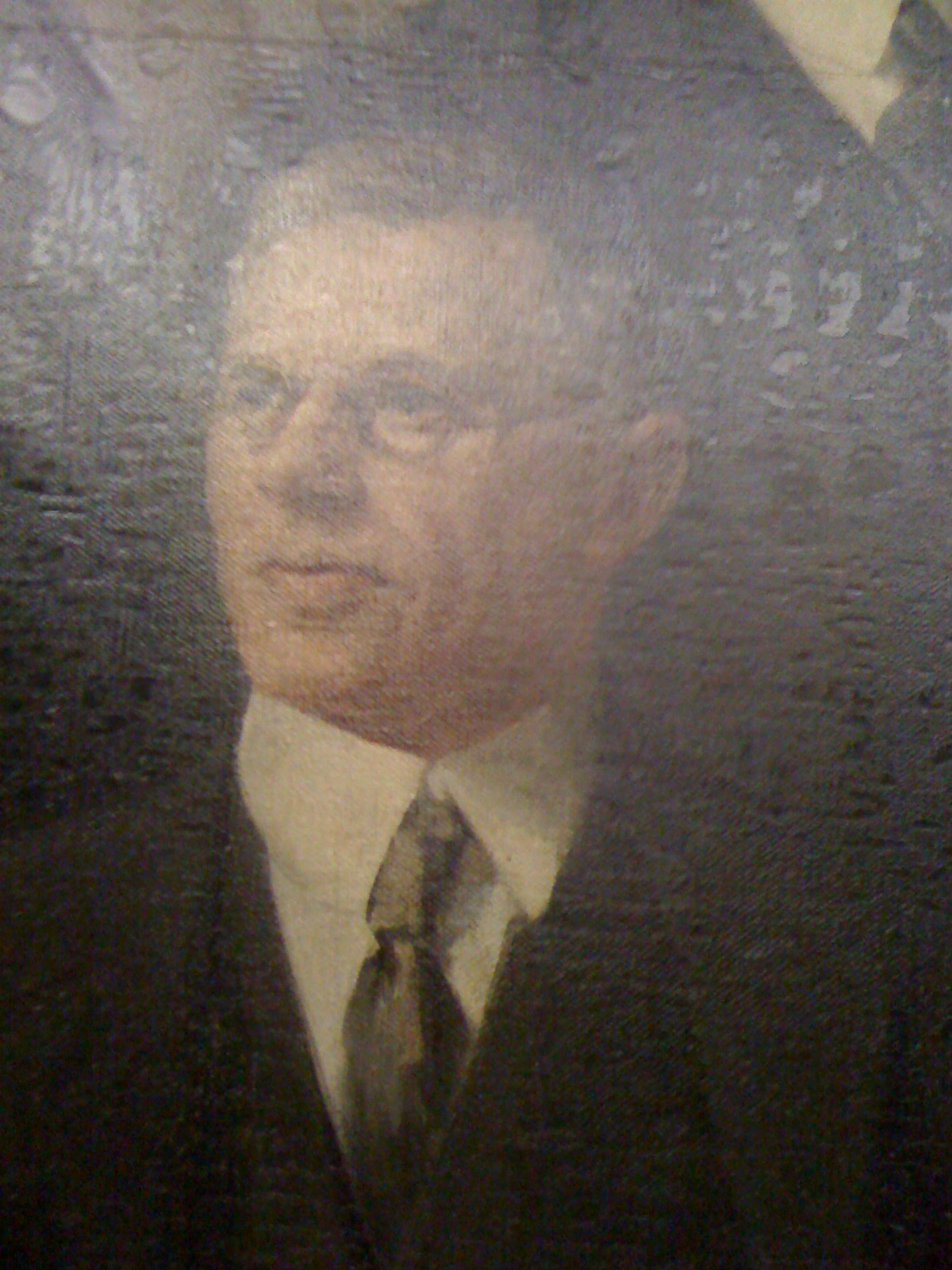
L B-S (looks spookily like somneone else we all knew and loved)
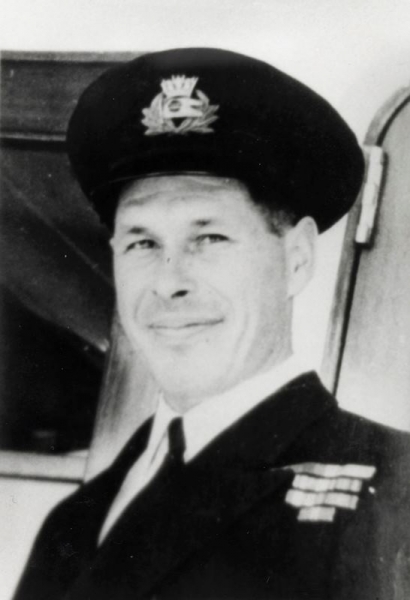
F B-S
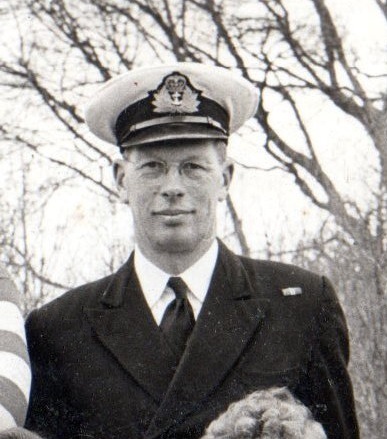
J B-S
|
Vice Admiral Sir David Brown KCB RN
(1941-45)
A gifted and incisive RN staff officer
who twice played a crucial background role in making the 1982 victory
in the Falklands war possible.
Deep defence cuts made by the secretary
of state Denis Healey, during Harold Wilson's Labour administrations
of the late 1960s, had effectively confined the Royal Navy to the north
Atlantic and the Mediterranean. Under Edward Heath's Conservative government
of the early 1970s, Brown, as Director of Naval Operations and Trade,
successfully argued the case for annual naval forays to such areas as
the far east and the south Atlantic. This revival of the old custom
of "showing the flag" would remind the world of Britain's
abiding foreign interests, such as the Falkland Islands. It also meant
that recruits could once again be attracted by the slogan, "Join
the navy and see the world". The future Admiral of the Fleet Lord
Lewin, who was chief of the defence staff at the time of the Falklands
war, was then vice chief of naval staff, and pushed Brown's idea through
the Ministry of Defence. A series of deployments a long way east (and
south) of Suez ensued.
Ironically, it was under Margaret Thatcher's
first administration that another massive defence cut - including slashing
the fleet and removing the last vestige of an already exiguous presence
in the south Atlantic - led the Argentinian military junta to think
that the Falklands were theirs for the taking. Thatcher's defence secretary,
John Nott, who had proposed severely reducing the fleet, including the
sale of the two aircraft carriers then in service, believed that nothing
could be done once the Argentinian army had taken the inhospitable archipelago
8,000 miles from Britain. Thatcher was furious but frustrated. There
was much wringing of hands until Admiral Sir Henry Leach, the chief
of naval staff, marched into parliament in his full uniform to seek
out the ministerial conclave. Lewin was on an official visit to New
Zealand and Leach was acting as his deputy. He persuaded Thatcher that
the navy could dispatch a task force "by the weekend" to take
back the Falklands. Three nuclear attack submarines set off at once,
while the bulk of the surface fleet was sent to the south Atlantic,
along with some 3,000 Royal Marines and paratroopers in commandeered
liners. By this time, Rear Admiral Brown was in the key post of Assistant
Chief of Defence Staff (Operations), and it fell to him, alongside Lewin,
to brief the daily meetings of the war cabinet in London on events in
the south Atlantic. His briefings impressed Thatcher and all who heard
them.
The son of a naval officer, Brown was born
in London on 28 th November 1927, and joined Conway. He was at, or near,
the top of his intake in several subjects, won prizes and was a cadet
captain. Poor eyesight meant that it took him five attempts to get into
the navy. His determination won him a place in the last week of the
second world war, at the age of 17. He became a specialist in anti-submarine
warfare and commanded eight vessels, from a gunboat, via minesweepers,
to frigates and a frigate squadron, and finally took charge of one of
the latest guided missile destroyers.
His inability to suffer fools gladly extended
to the top of the service, and probably explained why such a gifted
officer never made full admiral. He ran a tight ship, drove his juniors
hard, dismissing several, but did not suck up to his superiors, as tough
taskmasters sometimes do. He was once called aboard HMS Vanguard, Britain's
last battleship and the flagship of Admiral Sir Philip Vian, the C-in-C,
Home Fleet. Vian was furious because Brown's ship had failed to dip
its colours in salute to him as it entered harbour. After being bawled
out at considerable volume, Brown was cool enough to tell Vian that,
as a ship's captain, he was entitled to be piped aboard the flagship
- and had therefore not been properly saluted either.
Brown
saw active service as an operations officer in the confrontation with
Indonesia in the 1960s, and held several staff posts, including with
Nato. His last position was as Flag Officer, Plymouth, before he retired
in 1985 with a KCB. He was the last flag officer
of the Royal Navy to have served afloat in a ship of the line. He became a company director and, for a time, was
chairman of the governors at Broadmoor hospital. Always a keen fisherman,
he gave a lot of time to angling organisations, as well as to Trinity
House.
|
|
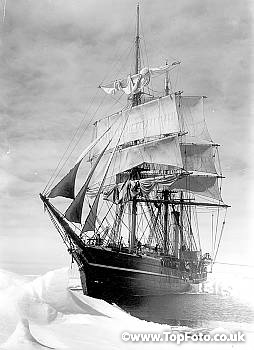
Lt Patrick S Campbell RN (1906-1911)
Lt
Campbell spent four years and a term in Conway – a very long sojourn
compared to the norm at the time of two years. The reasons for this
long course are not known. In 1920 he was appointed Captain of the
Terra Nova for Lachlan Cope’s Antarctic Expedition. The plan was to
sail to Wellington, New Zealand and thence to Macquaric Island where a
geological survey was planned. The main purpose was to undertake a five
year circumnavigation of Antartica to complete a new detailed chart of
the whole continent, and to “fill in the gaps” left by Scot, Shackleton
and Mawson.
|
|
Admiral Sir Sackville Hamilton Carden KCMG RN (1868-70)
Sackville
Carden joined the Royal Navy direct from Conway in 1870 and was the
first Conway cadet to achieve flag rank. Prior to the first world war
he saw active service in the Egyptian and Sudan campaigns of 1882-84
and the Benin expedition of 1897. He was promoted Captain in 1899 and
Rear-Admiral in 1908. His first command was Nile’s sister ship London.
At the outbreak of war he was moved from his position as superintendent
of the Malta dockyard to command the Mediterranean fleet. Winston
Churchill, the First Lord of the Admiralty, asked him to produce a
strategy for the Dardanelles campaign. He proposed a three-stage
operation: the bombardment of the Turkish forts protecting the
Dardanelles, the clearing of the minefields and then the invasion fleet
travelling up the Straits, through the Sea of Marmara to
Constantinople. Carden argued that to be successful the operation would
need 12 battleships, 3 battle-cruisers, 3 light cruisers, 16
destroyers, six submarines, 4 sea-planes and 12 minesweepers. Lord
Kitchener and Churchill liked the plan and on their advice Prime
Minister Asquith approved the operation. Carden commanded the naval
forces and launched the first attack on 19th February 1915 which was
successful but fell ill on 18th March and had to be replaced. His plan
was amended to include major troop landings much further south,
resulting in the disaster known as Gallipoli.
Resigning from the British Navy two years later with the rank of full Admiral, he lived in retirement until his death in 1930.
|
|
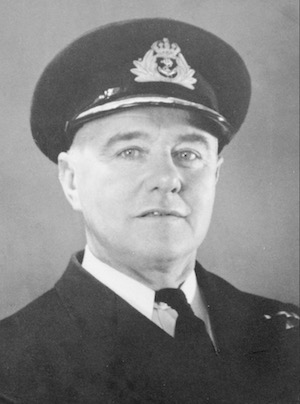
Commodore D A Casey Royal Naval Reserve (05-07) CBE DSO DSC ADC
Commodore
D.A.Casey was born on 25.10.1889 in Clonmel, County Tipperary, his
father was the bank manager for the Bank of Ireland in Clonmel and was
eventually sent to work in Dublin where he then went to a local Dublin
school, shortly after he was then sent to St.George's, Weybridge. At
sixteen he joined the Merchant Training Ship HMS Conway.
He passed out from there in second place. He joined the shipping firm
Robinsons who specialised in trade with Chile. He joined the R.N.R.
staying with it until 1968. When WW1 broke out he reported to the
sbmarine base in Gosport. He stayed with the submarine service
throughout WW1 either in submarines or as Navigator in the destroyer
HMS Trident and HMS Ithuriel.
After
the war he returned to the Royal Mail Lines, running from the UK to the
East Coast of South America. In 1936 he became Marine Superintendent at
Southampton running the whole of the sea going operation of the Royal
Mail Lines. He had been promoted to Captain in the RNR, and when war
was declared joined up full time. He was given the task of supervising
all sea-going traffic in the Weymouth and Poole area. His biggest
challenge was trying to arrange berths for all the ships that returned
back from Dunkirk.
His
expertise with his peacetime role was used with the convoys that were
coming over, he was promoted to Ocean Commodore. In total he sailed
with over 19 convoys mainly across the Atlantic, one being from
Scotland to Murmansk. This involved 60 ships and they had to avoid air
attacks from off the coast of Norway, and were also shadowed by a U
boat, successful weaving among icebergs made it impossible for the U
Boat to attack. He went to India on 1st December 1944 as Deputy Sea
transport Delhi, he was released on 17th July 1947 as rank of
Commodore.
He
was later promoted to RNR ADC to King George VI. He had met the king
before when as a Midshipman they both went on the submarine K3, the
submarine on a test run ended up hitting the seabed and a number of the
crew went flying, it took 20 minutes for the submarine to be freed and
in dry dock gravel had to be dug out of the torpedo tubes. He retired
from the Royal Mail Lines in 1949, with the rank of Commodore as
Captain of their flagship "Andes". He had moved to the Isle of Wight in
in 1942 and to Ryde in the 1950's. He died on the 20th July 1968
C.B.E. London Gazette 1.1.1942: Awarded for co-ordinating port
facilities in the Poole, Weymouth sea lanes at the time of Dunkirk.
D.S.O. London Gazette 21.7.1942: Awarded for bravery, seamanship
and resolution in bringing the convoy through to Murmansk in the face
of relentless and determined attacks by enemy aircraft and U boats.
D.S.C. London Gazette 25.10.1916. In recognition of services in submarines in enemy waters.
|
|
D G Chapman (1922-24)
Represented Great Britain in the 4 by 400
m at the 1928 Amsterdam Olympics.
|
|
Michael
Anthony Chodzko (1925-28) (Actor
stage name Michael Anthony)
He was born in Jersey,
the son of a master mariner and distant relative of Joseph Conrad. He
joined Canadian Pacific from Conway and went on the stage in 1933. His
acting career was broken by war service when he was twice mentioned
in despatches and as a navigator with Everards from 1971-76. A strongly
built man and 6 feet tall, he had arresting blue eyes. He was a successful
stage and film actor and singer but pre-dated the television age. Noel
Coward called him "Jolly Slyboots". He drew the attention of the Lord
Chancellor for one of his performances. Looking fetching and holding
a bunch of flowers, he began singing "Jolie garcon c'est moi, oui oui?."
The Lord Chamberlain ruled that he could perform the piece only if ??he
should remain still and make no movement on stage associated with what
are commonly known as pansies?. This performance hardly matched his
real life persona as he was married twice and had a daughter.
http://www.filmreference.com/film/44/Michael-Anthony.html
|
|
Vice Admiral Sir David Clutterbuck RN
(1926-29)
Deputy Supreme Allied Commander North Atlantic
in the 1950s. Past President of the HMS Newfoundland Association
Obituaries from The Times (click here) and The World Naval Ships Forum (click here)
|
|
"Hugh Conway" the pen name
for Frederick John Fargus (1861-2)
An accident at Conway affected his hearing
so he could not go to sea. He joined the family business in Bristol
and began writing. His works included A Life's Idyll (1879) - a book
of poetry, A Family Affair (novel), Living or Dead (novel), A Cardinal
Sin (novel) and an opera Iduna. His best known work though was a novel
Called Back published in 1883. It was an international best seller,
described as "..one of the most remarkably successful books of
the last 100 years.". It was turned into a popular play and
a music hall burlesque called The Scalded Back.
Hugh Conway died in Monte Carlo in 1885 and is buried in Nice. A stained glass window
in St Stephen's Church Bristol and a marble memorial (with a portrait
of him in raised relief) in the west wall of the north transept of Bristol
Cathedral commemorate his memory.
There is a literary scholarship in his name at Bristol University.
A copy of the book, a profile and
obituaries are at: http://www.mtroyal.ab.ca/gaslight/caldmenu
|
|
Captain W.H. Coombes (1907-09)
From
the end of the war through to the General Strike in 1926 many
deep-seated grievances in the Merchant Navy surfaced. Merchant Navy
officers felt undervalued, underpaid and underrepresented. They formed
their first union, the British Merchant Service League in 1919 but this
failed in 1921. Captain Coombs left the sea in 1921 determined to
improve their status and circumstances. He formed the Navigators and
General Insurance Company to enable officers to insure themselves
against the loss of their professional certificates following an
official enquiry into the loss of a ship, a collision or other
accident. They introduced Emergency Travel Indemnity Insurance to cover
costs of emergency travel for husbands, wives and children. It was
advertised in the Cadet and heartily endorsed. In 1925 he wrote and
paid for the publication of a book, The Nation’s Keymen in which he
argued the case for the professional status and role of the Merchant
Navy officer.
His
work inspired others and he was instrumental in the formation of The
Honourable Company of Master Mariners. In in 1928 he was influential in
the formation of
the Officers’ (MN) Federation through which many British and
Commonwealth officers’ associations worked together on key issues. In
1932 he formed The Watch Ashore to represent officers’ wives(see image
andweb site here) .
Determined
to make the Government improve the lot of officers, he organised a
23,000 signature petition which resulted in the creation of the
Merchant Navy Officers’ Pension Fund and the Central Board for the
Training of Officers for the Merchant Navy. In 1935 he formed the
Navigators & Engineers Officers Union.
|
|
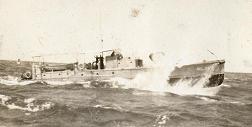
The Craven-Phillips Brothers
One gave his life in horrific circumstances for his country, the other was honoured by the King for his dedicated service.
Commander (E) George Hutchison Craven-Phillips RN (1925-27)
joined
the RN in 1922. From 7th April 1926 to 21st March 1928 he served in HMS
Enterprise when she took the Prince of Wales on a world tour. He was
posted from Enterprise to Erebus the cadet training ship and turret
drill ship at Devonport for duty with Special Entry cadets. He served
with the Fleet Air Arm early in the war at H.M.S. Nasar (RNAS Sembawang) near Singapore. He is listed as Killed in
Action in HM Motor Launch 433
on 15 February 1942 along with the CO and her crew, if not all hands.
He was probably escaping from the advancing Japanese Army in ML433 and
heading towards Batavia in company with other assorted craft. She was “Lost by gunfire from Japanese surface vessels off Banka Strait”.
Commander (E) Percival Hutchison Craven Phillips
Joined
Conway in May 1919 (listed under Phillips) and left in December 1920
thereafter passing into the Royal Navy otherwise than by Direct Entry.
He was awarded the OBE in the King’s Birthday Honours of 1944. It seems
George and Percival were brothers - or perhaps cousins, both
specialised in engineering in the regular Navy, becoming Commanders (E)
RN, there is confusion about: their hyphenated name, the spelling of
“Phillips” with one or two “l’s”. However their father was a Lt Col
Phillps and their mother was a Craven-Phillips. There is a total lack
of any further information about the survivor: where he was serving,
for instance.
|
|
Commander George Witheridge Couch (1911-13)
He
left Conway and joined the barque Inveramsay as midshipman but was
called up in July 1914. He joined the Conway as second officer in 1926
and I believe became Chief Executive Officer in 1934 until the outbreak
of WW2. He is beleived to be the youngest person ever to achieve an
extra masters certificate - at the age of 23. That topped his Extra
Passing Out Certificate. C R E Sergenat (years not known) gained his at
the age of 23 but was slightly older than Couch. In the 1930s he
commisioned the ship's carpenter to produce a model of the ship,
similar to the model the carpenter had made in 1932 for the King.
|
|
E. Howard Davies (1933-1935) and ex
Staff
Co-Designer of the GP 14 Sailing Dinghy, over
200,000 registered worldwide.
|
|
Vice Admiral Sir Archie Day RN KBE CBE CB DSO (1913-14)
He
was born in Norwich in 1899 and joined the RN direct from Conway.
During WWI he served in HMS Lowestoft, HMS Britannia, HMS Courageous
and in the destroyer HMS Welland.
After the war he spent two terms at Cambridge University studying Hydrographic surveying. He was a made an hereditary Freeman of the City of Norwich in1920.From
1922 to 1939 he held an number od surveying appointments. He was
promoted to Captain in 1940 becoming Assistant Hydrographer in 1943.
In
1949 he wa promoted to Rear Admiral and became Flag Officer Commanding
British Naval Forces in Germany and Chief British Naval Representative
in the Allied Control Commission.
Was
Chief Hydrographer to the Navy from 1950 to 1955 so his name will be
found on many old charts. After leaving the Navy he completed the
Hydrographic Survey of Lake Nyasa in 1955-1956. He was Co ordinator of
Operations for International Geophysical Year in 1957-1958, Acting
Conservator, River Mersey 1961-1970, Chairman, Dover Harbour Board
1965. He died in 1970.
|
|
Edgar Claude Donovan Croix de Guerre (1900-01)
- Frustrated by slow promotion (he had a Master's
certidficate but only served as 2nd Mate) he left the sea and took a
job in the Hull Labour Exchange. On the outbreak of WWI he joined the
Public Schools batallion of the RNVR as an Ordinary Seaman wher he was
assigned to the land based Hawke Batallion of the RN Division He was
sent to Gallipoli and later transferred to RN Siege Guns Service in
Flanders where he was killed during a fierce bombardmnent and awarded
the Croix de Gueree posthumously. For a more detailed story of his life
and an explanation of how he came to be represented in a stained glass
window click here.
|
|
Vice
Admiral T B Drew RN CB CVO OBE (1902-03)
- Awarded OBE in WW1 for pursuit of Goeben and Breslau in the light cruiser Gloucester
|
|
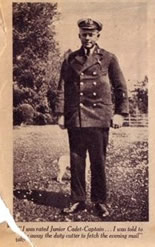
Douglas V. Duff (1914-15)
Novelist and writer of Boys Adventure stories
his brother Lord Duff owned the Vaynol Estates opposite Plas Newydd.
He was born in Rosario de Santa Fe in the Argentine in 1901. He entered
Conway in 1914. At the age of 15 in the year 1916 he joined the Merchant
Navy as a cadet for he was determined to go to war. He was sent to the
“ Thracia” trading between Liverpool and the Mediterranean.
"On March 27th, 1917 the Thracia was torpedoed in the Bay of Biscay.
At the age of 15 and a half my father was sole survivor and, for a while,
was posted as “killed in action”.'After recovering at the
family home in Ireland he went back to sea. This time he served as a
midshipman and, in an encounter with German U boats, he had his leg
broken.
After recovering he went to sea again in June 1918 and was again torpedoed.
He was still only 17 years old at the time. Next he was sent to the
Black Sea and was involved in the rescue of many fugitives from the
Bolshevists. This was a part of his life he never talked about except
to say it was “indescribable”.
When shipwrecked from the Thracia he had made a vow to dedicate his
life to God if he was saved. Thus he entered the noviciate of a teaching
order of monks at Deeping St James in Lincolnshire. However, after 22
months he left, for he discovered that he had no vocation for that kind
of life. In addition he found that he had no liking for the discipline
and that he resented the vow of celibacy.
For a review of his life and books click here
|
|
After this he joined the Royal Irish Constabulary. As a keen young constable
he tried to arrest Michael Collins in the main thoroughfare in Dublin.
Collins told him not to be so stupid because he was surrounded by bodyguards
who would kill him before he'd taken a step!
He left the RIC when it disbanded in 1922 and joined the Palestine Police.
Eventually he made his way up through the ranks until he was in command
of the police in Jerusalem .He met his first wife, Janet Wallace, who
was a nursing sister in Nazareth. He first heard of her when she was
reported as repelling an attack on her hospital with a broom !
After Palestine Douglas expected to get a post in the Jamaican Police
but he had contracted malaria and was not fit for that sort
of tropical duty. He needed to earn a living and so took up writing
and journalism - at one time he was sent to interview Haile Selassie,
the Emperor of Ethiopa.
As the Second World War inevitably approached he joined the Royal Naval
Volunteer Supplementary Reserve. This later became the RNVR. At first
he took command of “Grey Mist” as part of the Dover Patrol.
Next he was appointed to the Staff of Admiral Andrew Cunningham, Commander
in Chief of the Mediterranean Fleet. Under Cunningham he carried out
various duties, serving as Naval Officer in charge at Derna, and then
as officer in command of the Western Desert Flotilla's Schooner he called
"Eskimo Nell" breaking the blockade of Tobruk.
He was next put in command of HMS Stag (N) whose duties included netting
the Suez Canal. In 1943 he was transferred home and appointed Staff
Officer Operations (2) in Falmouth. From there he went to the Irregular
Warfare Department of the Admiralty stationed at Teignmouth. He was
demobilised in November 1945. He continued writing, broadcasting and
television work until his death in 1978.
He wrote about 100 books in his lifetime as well as 2 autobiographies
‘ May the Winds Blow’ and ‘Bailing with a Teaspoon’
which are both still available on used book sites on the Internet. His
The Sea Whelps is a fictionalised account of his time as a Conway cadet.
|
|
Iain Duncan Smith (1968-72)
Iain Duncan Smith was born in April 1954.
He joined Conway in January 1968 when he was nearly 14. During his sojourn
he was a Focsleman, a drummer in the band, captain of the cricket team
in 1972, won "colours" in the first XV in the Autumn 1971
term and played for the hockey team. He won the Lawrence Holt prize
for History in 1972 and left with 3 A levels and 8 O levels.
From Conway he went on to Perugia University
in Italy, then to Sandhurst and so to the Scots Guards, with whom he
served from 1975 to 81. He then retired from the Army and went into
Industry. He was a Director of GEC/Marconi from 1981-88; a Director
of Bellwinch Plc from 1988-89 and Publishing Director of Jane`s Information
Group from 1989-92
He contested Bradford West in the 1987
General Election. He was Vice-Chairman of Fulham Conservative Association
in 1991. The following year he was elected Member of Parliament for
Chingford.He sat on the Standards in Public Life (Nolan) Select Committee
and the Members' Interests Select Committee. He was a member of the
Administration Select Committee and a former member of the Health Select
Committee. From 1992-97 he was secretary of the Conservative Back Bench
Foreign and Commonwealth Affairs Committee and a member of the Conservative
Back Bench Defence Committee. He was also on the Conservative Central
Office General Election Campaign Team. Following boundary changes he
was elected Member of Parliament for Chingford & Woodford Green
in May 1997 with a majority of 5,714. From June 1997 he was Shadow Secretary
of State for Social Security. In June 1999 he was appointed Shadow Secretary
of State for Defence. He led the Conservative Party from 2001 to 2003.
He is along standing member of the Cabinet. His website can be found here.
|
|
Captain Sir Malcolm Edge KCVO (1947-49)
Former
Deputy Master of Trinity House and Vice President of the Maritime
Volunteeer Service. He represented the Honourable Company of Master
Mariners at a sitting of a Parliamentary Committee enquiring into the
disastrous oil spill caused by the
Amoco Cadiz grounding on the Britanny coast in 1978. He had several
years command experience of very large tankers in BP and gave evidence
about the manoeuvrability of VLCCs.
|
|
Captain Walter Elliot RN MP (1923-27))
Played rugby union for England. MP for Carshalton from February 6, 1961 - December 6, 1973. Raised
a petition in the House of Commons to try and prevent the closure of
the Conway when he was a Conservative MP.
Conway speech from Hansard
|
|
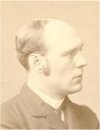
Frederick John Fargus (1861-2)
Hugh Conway was the pen-name of Frederick John Fargus (1861-62). An
injury while in Conway meant he could not go to sea so he became an
author instead. His third book, Called Back, was published in 1883 and
described as a “sensational novel of murder, amnesia, Siberian exile, political assassination and detection”. It was an immediate huge best seller with over 350,000 copies sold, “one of the most remarkable successes of the last 100 years”.
Reviewers anticipated that Hugh would displace Wilkie Collins,
Stevenson and even Conan Doyle as Britain’s top writer.Unfortunately
Hugh died young at the age of 37 so his potential was never realised.
|
|
Rear
Admiral Douglas Henry Everett RN CB CBE MBE DSO (11-13)
During WWI he served in Zealandia
and Resolution. He was Fleet Signal Officer Nelson, 2 Battle Sqn, Home
Fleet 1932-1933, and attended the RN Staff College, Greenwich in 1934.
He was Staff Officer (Operations) to Commander-in-Chief, China Station,
HMS Kent from 1935 to 1937; then Executive Officer Ajax 1937-1940. During
World War II he served at the battle of the River Plate. He was Chief
Staff Officer to Force V, planning the invasion of Sicily 1942-1943;
commanded Arbiter (aircraft carrier) in the Far East 1944-1945. After
the war he was Commander-in-Chief, Hong Kong 1945-1947; commanded Duke
Of York 1947-1949; Flag Officer, Ground Training 1949-1951; President
of Admiralty Interview Board 1951-1952. He retired in 1952.
|
|
Terence Fisher (Approx 1916-8)
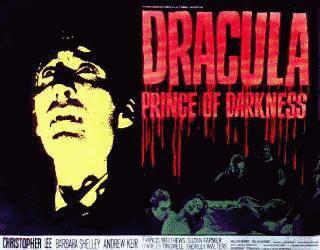 He
was one of Hammer Fims most prolific and successful horror fim
directors - if you shuddered through it, he probably directed it. He
directed most of their Dracula and Frankenstein films plus others on
werewolves and Sherlock Holmes. There is an interesting profile here.
Hisfirst film as adirector was The Wicked Lady in 1947, his last film
Frankenstein and the Monster from Hell was released in 1974. He died in
1980. He
was one of Hammer Fims most prolific and successful horror fim
directors - if you shuddered through it, he probably directed it. He
directed most of their Dracula and Frankenstein films plus others on
werewolves and Sherlock Holmes. There is an interesting profile here.
Hisfirst film as adirector was The Wicked Lady in 1947, his last film
Frankenstein and the Monster from Hell was released in 1974. He died in
1980.
|
|
Cmdr. Roy Francis RN (years
not known)
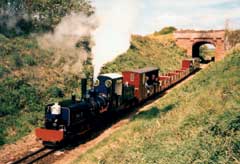 Roy's personal passionate dream, hard work and sheer determinationled
him to build the mile long 101⁄4" gauge beach railway at
Wells. In 1979 he started to construct the Wells & Walsingham Light Railway on the four miles of old Great
Eastern track bed from Wells to Walsingham. Work was completed in 1982
and on 6th April services began on schedule making it the longest 101⁄4"
narrow gauge steam railway in the world. Roy's personal passionate dream, hard work and sheer determinationled
him to build the mile long 101⁄4" gauge beach railway at
Wells. In 1979 he started to construct the Wells & Walsingham Light Railway on the four miles of old Great
Eastern track bed from Wells to Walsingham. Work was completed in 1982
and on 6th April services began on schedule making it the longest 101⁄4"
narrow gauge steam railway in the world.
|
|
Captain Richard Garstin OBE, CBE RIN (00/02)
Returned
from the RIN Retired List in 1942 and became a Commodore of Ocean
Convoys. Sadly, he was lost when SS Stentor, the Vice-Commodore’s ship
in Convoy SL-125, was torpedoed by U-509 on 27the October 1942, and
suffered many casualties. Strangely, his name is missing from the World
War 2 Honours and Memorial Boards - although he appears on the
Liverpool Naval Memorial.
|
|
Venerable Simon Golding (61-63)
Archdeacon
for the Royal Navy and an Honorary Chaplain to Her Majesty the Queen
since March 17 1997. He was made an Honorary Canon of Gibraltar Cathedral
in 1998. He was appointed Chaplain
of the Fleet and Director General of the Naval Chaplaincy Service on
June 1 2000.Born
in Chelmsford on March 30 1946 his childhood was spent in India and
he was educated in India and the United Kingdom. He attended St Xavier's
School, Jaipur - the Junior School, Felsted - the Bishop's School, Poona
and HMS Conway before starting a careeer at sea with BI.
http://www.navynews.co.uk/articles/0006/1000060701.htm
|
|
Major
Sir Hamilton Goold-Adams GCMG CB (1880-83)
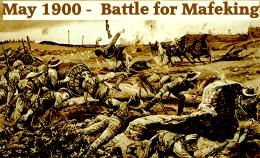 This
cadet went on to prove that Old Conways could be successful soldiers
and diplomats. After his period in the Ship he went to sea in the
clipper Knight of Snowdon. In 1878, after five years at sea, he came
ashore and joined the army as a Lieutenant in the Royal Scots Regiment.
His life became a mirror of empire. In 1884 he was in the Border Police
in Bechuanaland and later commanded the British garrison there. In 1893
he was caught up in the conflict with the Matabele and commanded the
British forces advance from Bulawayo. He fought and beat the Matabele
army at the battle of Sengazi. Joining forces with two other columns,
the Matabele were finally defeated and he became Resident Commissioner
in Bechuanaland. During the Boer War he commanded the Town Guard in
Mafeking throughout the siege. He was nearly killed by shelling twice
and one occasion he was buried in the rubble of his office when a shell
burst overhead. After the war he became Governor of the Orange River
Colony. In 1911 he was made High Commissioner for Cyprus and Governor
of Queensland (1915-1920). He laid the foundation stone for Brisbane
City Hall.
He service was rewarded with the KCMG, CMG and CB. He was returning to
the UK from Queensland when he died of pneumonia in Cape Town on April
12th 1920. This
cadet went on to prove that Old Conways could be successful soldiers
and diplomats. After his period in the Ship he went to sea in the
clipper Knight of Snowdon. In 1878, after five years at sea, he came
ashore and joined the army as a Lieutenant in the Royal Scots Regiment.
His life became a mirror of empire. In 1884 he was in the Border Police
in Bechuanaland and later commanded the British garrison there. In 1893
he was caught up in the conflict with the Matabele and commanded the
British forces advance from Bulawayo. He fought and beat the Matabele
army at the battle of Sengazi. Joining forces with two other columns,
the Matabele were finally defeated and he became Resident Commissioner
in Bechuanaland. During the Boer War he commanded the Town Guard in
Mafeking throughout the siege. He was nearly killed by shelling twice
and one occasion he was buried in the rubble of his office when a shell
burst overhead. After the war he became Governor of the Orange River
Colony. In 1911 he was made High Commissioner for Cyprus and Governor
of Queensland (1915-1920). He laid the foundation stone for Brisbane
City Hall.
He service was rewarded with the KCMG, CMG and CB. He was returning to
the UK from Queensland when he died of pneumonia in Cape Town on April
12th 1920.
He was the first President of the Conway Club (1910-20) -
an absentee landlord for five of those years!
|
|
Vic
Green (1940-42ish)
Vic entered Conway
from the Liverpool Institute about 1940 and on leaving joined the Navy
as a Midshipman RNR. He was a notable character with a strong
Liverpool accent and much respected by his contemporaries as a colourful
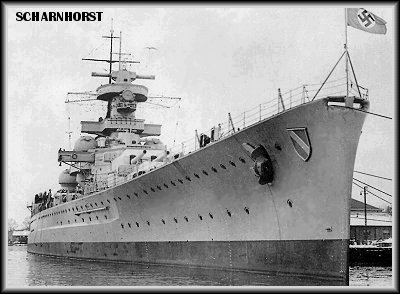
"hard man. What follows is hearsay:"During
the Battle of North Cape in December 1943 resulting in the sinking of
Scharnhorst, Vic Green's action station was in the TS (Transmitting
Station). This was the 'brain' behind the gunnery control system where
all intelligence was fed: own course and speed, enemy bearing and range,
etc. - all was passed through a large hand-cranked mechanical calculator
to determine the settings for the guns. Situated deep in the bowels
of the ship. the TS was manned in Sheffield, as in many ships
at that time, by members of the Royal Marine Band. It was claustrophobic
and the noise of battle pushed a young bandsman over the edge and he
began to panic. Vic dealt with him by means of "physical restraint
and verbal persuasion" and calm was restored to this vital element
of Sheffield's capabilities. For his rapid reaction, resourcefulness
and determination, Midshipman Vic Green was officially Mentioned in
Dispatches and thereafter entitled to wear an oak leaf cluster on his
war medal. As Doug tells the story, Vic's inate ability with
his fists saved the day!"
|
|
Mr John Gurdon (1876-78)
He
was described in 1912 as the man with a triple personality “Sailor,
City Man & Poet”. In his years at sea after Conway he
circumnavigated the world four times rising to be Chief Mate in sail.
He came ashore to become the private secretary to the Governor of the
Bahamas, Sir Ambrose Shea. After that post he managed a sisal farm on
the island before returning to the UK to live at Richmond. He became
the Director of well known and successful rubber company. He also
started writing poetry and his first work was a tragedy called Erinna.
He published at least two more anthologies of poems “Dramatic Lyrics”
and later ”Enchantments” of which the Director of the Poetry Society
said “ Mr Gurdon’s lyrics show scholarship, a fine ear for harmonics
and luxuriant fancy. It is the work of a man who has lived before he
has written”. Other critics praised him highly claiming he was “as good
as Swinburne”.
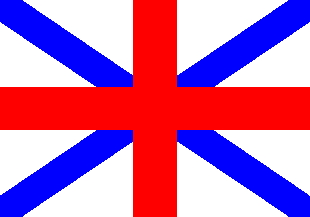
|
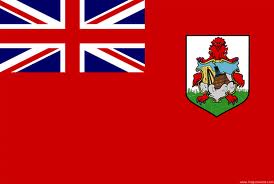
Bermuda Flag
|
Commodore Herbert J Haddock, CB, RD, RNR (1875-77)
Commodore
Herbert James Haddock was born in 27th January 1861 [copy Birth
Certificate – March quarter Rugby 6d 438] at 29 Warwick Street, Rugby,
Warwickshire.
He was in fact,
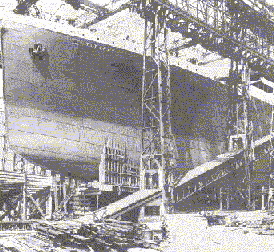
the first Captain of the Titanic. He commanded her in Belfast before
her delivery to the White Star Line. White Star decided at the last
moment, on April 1 1912, to make Captain Edward John Smith master for
her first voyage - perhaps because it would be Smith's last cruise.
Haddock took command of the Olympic from Smith (until 1915) and was a few days behind her when the Titanic went down. Captain Haddock testified to the
American inquiry and later also attended the British Board of Trade
inquiry. He was also master of Cedric in 1903 and Oceanic from 1907
He was one of the first boys to be appointed Midshipman RNR. In 1888 he was serving temporarily in HMS Edinburgh at Malta.
The
White Star Line nearly suffered another disaster seven weeks after the
Titanic went down when Haddock, though faulty navigation, narrowly
avoided running the Olympic onto rocks near Lands End. For the next few
voyages he was closely monitored by a White Star Line official. Haddock
was in command of the Olympic during her failed effort to rescue HMS Audacious in October 1912.
Olympic was then laid up prior to conversion to a troopship, and the
Admiralty placed Haddock in charge of a dummy fleet of merchant ships,
stationed at Belfast. According to Mills' HMHS Britannic: The Last Titan,
Harold Sanderson tried to have Haddock re-assigned in 1915, to command
the Britannic when she entered service as a hospital ship, but could
not succeed in convincing the Admiralty to release Haddock from his
Belfast duties.
Haddock was
thought not to have rejoined White Star after WWI but his obituary in
The Cadet records that he was Commodore of White Star Line at some
point. He was awarded the CB in 1902, and made ADC to HM The King in
1915. He retired 1931 age 70. He died in October 1946 aged 85 and is
buried in St Mary Extra Cemetery, Portsmouth Rd, Sholing, Southampton -
Plot D030/016.
His younger
brother James Rudolf – also attended Conway July 1879 to July 1880,
brother Sidney George went to HMS Marlborough at Portsmouth, and there
was a third brother John Cecil.
My
thanks to Chris Bussell of Southampton for most of the above
information. He is researching Haddock's life so if you have any more
information please email Chris at chris.bussell@tiscali.co.uk
|
|
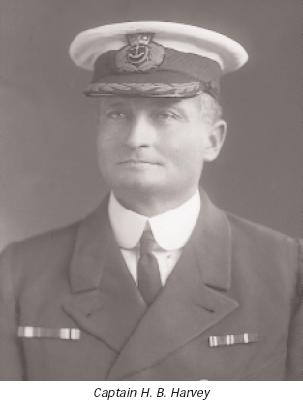
Captain Henry Broderick Harvey (1894-5)
He
trained as Cadet aged 14 iin Conway, before serving in his first ship, the Liverpool
barque Red Gauntlet; whilst serving as Chief Officer in the Union -
Castle Line Steamer Crawford Castle, Harvey played a leading role in a
daring rescue of S.S. Willy
At 8.15am, Sunday 1.10.1911, the steamship Willy (862 tons), of the
Coaling Agency of W.H. Berghuys of Amsterdam, was observed flying
signals of distress in the North Sea. The ship bound from Newcastle to
Amsterdam had sprung a leak due to the horrendous conditions, apparent
for the last 24 hours.
The
Cawdor Castle (Captain E.W. Day), which had set sail that morning, came
upon the Willy in her state of distress, and despite the hurricane like
conditions that were raging, determined to send a lifeboat out to her.
At 10.50am the lifeboat was launched, under the command of Harvey,
crewed by six Able Seamen (E. Jones (Quartermaster); J. Avis; W. Yapp;
C. Anderson; M. McDonald and E. Franklin), 'With characteristic British
courage.....they stuck manfully to their oars, and gradually lessened
the distance between them and the disabled steamer'.
The
perilous seas continued to play havoc with the rescue attempt. Firstly
a Dutch crewman, aware of how grim the situation was, dived overboard,
only to be swept further away, causing immense difficulties for the
lifeboat to rescue him; and shortly following his pick up, two men
attempting to get a ladder to the lifeboat fell overboard. Captain Day
brought the Cawdor Castle to windward of the lifeboat, and sheltered it
from the wind, thus finally enabling the craft to reach the stricken
Dutchmen.
Harvey
loaded ten of the crew, and made with his load back to the Cawdor
Castle. However having struggled to make a length away from the Willy,
shouts came across to him that she was sinking fast and that unless he
came back for the rest of the crew, then they would surely go down with
her. Thus loaded with the last six Dutch crew members the lifeboat
finally started to return to its mother ship. Given the conditions and
the fact that she was so heavily laden it was deemed too dangerous to
attempt to turn the craft round, thus the oarsmen had the particularly
arduous task of having to back water.
Within
15 minutes of rescuing the crew, at 12.50pm, the Willy heeled over and
sank head first into the North Sea, 'At 1.15pm the lifeboat reached the
ship, badly damaged and half full of water, with crew and survivors
completely exhausted.....I cannot speak too highly of the conduct of
the Chief Officer and the lifeboat's crew, who showed great gallantry."
(Newspaper Cutting, Interview with Captain E.W. Day refers). The battle
against the waves had lasted two and a half hours, and the badly
damaged lifeboat had to be abandoned. On arrival in Cape Town, the
Mayor of the City (Sir F. Smith), presented the crew with their Lloyd's
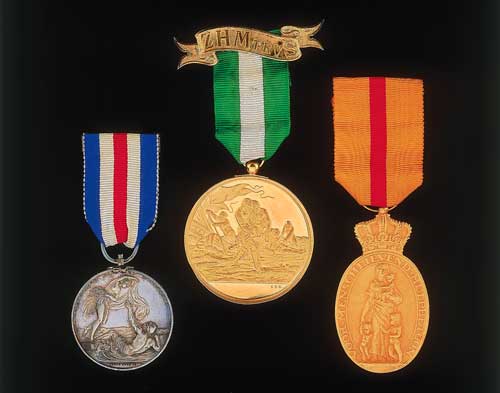
medals and certificates; Day and Harvey subsequently recieved the Dutch
gold medals upon their return to England. Harvey recieved Lloyd's
Silver medal for Saving Life at Sea, 36mm. (H.B. Harvey, Chief Officer,
S.S."Cawdor Castle" 1st October 1911.), the Netherlands, Gold Medal for
Saving Life, 60mm. x 32mm., reverse impressed 'H.B. Harvey', in J.M.J.
Van Wielik, Haag, case of issue, with bestowal document dated
24.12.1912 and the Netherlands, South Holland Lifeboat Institution of
Rotterdam's Gold medal, 44mm., reverse engraved 'H.B. Harvey 1911'
Early in the Great War, Harvey was appointed to his first command, the
S.S. Hova (afterwards re-named the Crawford Castle), 'When the Hova was
off Cape Sidero, Crete, on one voyage, carrying 1,000 tons of coal for
the British Fleet in the Persian Gulf, she was attacked by a German
submarine. Fortunately, the torpedo was seen in time, and, thanks to
smart handling by Captain Harvey, the ship was so manoeuvred that the
torpedo missed the stern by six feet. Captain Harvey's next encounter
with a U-boat had more serious results, for his ship, the Leasowe
Castle, was struck by a torpedo which carried away the rudder.
Fortunately, however, the propellers were not harmed, and the vessel
eventually reached Gibraltar.' (The Journal of Commerce & Shipping
Telegraph, 28.7.1934, refers).
Captain
H.B. Harvey served in 39 vessels during his 36 years service with the
Union-Castle Line, and retired in 1934 after 50 eventful years at sea.
|
|
Captain Sir Edward James Headlam RIN Kt, CSI CMG DSO
He was of Conway's many members of the Royal Indian Marine. There is a detialed family web-site at http://www.headlam.me.uk/html_pages/headlam_E_H.htm
|
|
Captain Eric Hewitt RD RNR (1919-21)
Last Captain of a Royal Navy floating Ship
Of The Line (1949 - 1953) and of the Conway in 1949 - 1968).
Eric
Hewitt completed his Conway training in April 1921, achieving the rare
accolade of a Double Extra Passing Out Certificate. Accepted into the
RNR he spent six months with the fleet before completing his Merchant
Navy apprenticeship with Glen Line. He passed his second mates
certificate in June 1924 and moved to Royal Mail Lines. He obtained his
first mates certificate in 1927 just before his 23rd birthday and his
masters in 1930. He married Marjorie the same year. He was called up to
the RNR in 1939 and served with distinction throughout the war much of
the time on convoy and anti-submarine duties in the Mediterranean and
Atlantic. He was mentioned in despatches for his role in protecting a
convoy under extremely heavy air attack. He took part in the invasion
of Sicily in 1943 and the Normandy landings. In 1945 he was in
Singapore controlling the sea transport arrangements of the whole Far
East. In May 1947 Admiral Lord Louis Mountbatten brought him Delhi to
supervise the withdrawal by sea of British forces from India. He was
confirmed in the rank of Captain RNR at the early age of 40. He became
Conway’s Staff Captain in March 1948 and Captain Superintendent in
1949. He established Conway’s new routine on shore and afloat at Plas
Newydd, and saw her through the dreadful loss of the Ship in 1953. He
masterminded the next term in tents and the creation of the hutted
camp. When the New Block finally opened in 1964 after ten years of
struggle, he had achieved a minor miracle. Conway had been rehoused in
modern buildings, with extensive laboratory and classroom accommodation
and excellent playing fields. He worked tirelessly with the Headmaster
and Committee to extend and improve technical and academic training so
Conway supported the shipping industry’s needs. He was ably assisted by
his wife ‘Fanny’, indeed TEW Browne believed it was her determination
and support that motivated him through Conways’s most difficult times.
The Cadet magazine acknowledged “their steadfast championing of
Conway’s cause over 20 eventful years and the ever-constant service so
freely given to the Ship we all hold we all hold in such affection.” He
was not always popular with cadets, as his early nickname of ‘von
Hewitt’ demonstrates, but every cadet from 1949 to 1968 will
acknowledge his positive influence over their lives. If the Ship was
our old wooden mother he was our stern father. In 1968 they retired to
Penmon overlooking the strait and he became a part time coastguard.
Fanny died in 1984. Eric died on 13th December 1995, aged 91, as a
result of inhaling fumes from a fire at his home. Nearly four hundred
people attended his Memorial Service.
|
|
Sir Bushby Hewson (1917-19)
High Court Judge. Edited British Shipping Laws Volume2 (Carver's Carriage by Sea, Volume 1)
|
|
Capt W B Huddleston RIM (1880-82)
In
1892 he was awarded the Stanhope Gold Medal through the Royal Humae
Society (RHS). It was awarded at the end of every year for the most
conspicuous act out of all those receiving RHS awards in the year. 1890
his vessel the RIM survey steamer Investigator was in the Bay of Bengal
when the Gunner, having just hooked a large shark, fell over board into
shark infested waters. Without hesitation Huddleston jumped into the
water to rescue him knowing that the Gunner could not swim. Only after
some struggle to get the Gunner back on board, and with the sharks
turning their attention to him, did Huddleston think of his own safety
and scramble out of the water.
|
|
Captain / Brigadier General,
Robert Herbert Wilfred Hughes CB CSI CMG DSO RD (1885-6)
Robert
Hughes was born in 1872 in West Derby, Liverpool. He married
Kathleen Chapman from Louth, Lincolnshire. R. Hughes served in
the Merchant Service between 1887 and 1899. In 1903 he joined the
Colonial Civil Service Marine Department and later discovered the
important deep water harbour Port Harcourt, in Nigeria. He
achieved distinction in piloting HMS Challanger during the bombardment
of Duala.
he
held the temporary rank of Brigadier General, Royal Engineers during
the Gallipoli Campaign for which he was awarded the CMG in 1917.
He retired in 1930. He served in South Africa, Cameroon
and in the Colonial Civil Service Nigeria. Officer of Legion of Honour. died on 23/03/36.
|
|
Blair
Hughes-Stanton (approx.
1915-17)
A
painter, wood engraver, draughtsman and teacher; born in London, son of
painter Sir Herbert Hughes-Stanton, President of the Royal Society of
Painters in Watercolours. He was educated at Colet Court and joined
Conway at thirteen. Unable to master spelling and punctuation and after
failing to get into the Royal Navy, he studied art . First at the Byam
Shaw School ( 1919-22 ), then the Leon Underwood School of Painting and
Sculpture , the Royal Academy School (1922-2 5 ) and later full time
(1923-25). At Underwood's school he met Henry Moore and they formed a
group including Eileen Agar, Gertrude Hermes and Ralph Chubb. In 1925
the group broke away from the Society of Wood Engravers and formed the
English Wood Engravers Society. Hughes-Stanton married Gertrude Hermes
in 1926. He succeeded John Maynard as head of the Gregynog Press in
1931 and with his second wife, Ida Graves, established the Gemini
Press. He won an international prize for engraving at the Venice
Biennale in 1938. During the war he worked in camouflage with the Royal
Engineers, afterwards he was sent to Greece (he was captured, became a
POW and was shot in the face). After the war, commissions for private
press books dried up and his war wound seriously affected his three
dimensional vision. He found work teaching at Westminster School of Art
1947-8 and from 1948 Hughes-Stanton was a lecturer in printmaking and
drawing at the Society of Wood Engravers, St. Martins and The Central
School of Art. He latterly lived in Manningtree, Essex. His wood
engravings were the subject of a book, The Wood Engravings of Blair
Hughes-Stanton by his wife Penelope.
|
|
Captain
George Hunt DSO DSC RAN (1930-32)
George was born in Scotland in July 1916, At the age of 14 he commenced training at HMS Conway. During the period 1930 he served
variously with the Royal Navy in cruisers and merchant shipping companies
such as The Blue Funnel Line as a junior officer. 1937 saw him serving in a cruiser with the RN. As
part of the preparation for war in 1938 he was selected along with 100
others to serve full time with the RN.In 1939 he was a survivor from
the submarine Unity when she was rammed and sunk in the North Sea. In
1940 he was appointed second in command of HM Submarine Proteus. During
the period 1940/41 Proteus sank 12 ships and eventually the submarine
"retired hurt" after a collision with
an Italian destroyer. In 1942 he qualified for Command and later that year
took Command of HMS Ultor until the end of 1944. During that period
Captain Hunt sank 28 ships, was awarded 2 DSOs, 2 DSCs and was Mentioned
in Despatches twice. George Hunt rose to the rank of Commodore and eventually
retired in 1960 when he joined the RAN Emergency List at the rank of
Captain. During his final years in the RN he served as "Teacher"
in the Submarine Service which meant he had the responsibility for training
and qualifying submarine Commanding Officers. Other appointments included
"In Command" of a Destroyer and the 7th Frigate Squadron an
appointment in the NATO Area, Chief of Staff to Flag Officer Submarines
and finally Senior Naval Officer West Indies as a Commodore (One star).
He
settled in Queensland in 1963 joining the RANEM as a Captain. Since
coming to Queensland he served with the Company of Master Mariners,
and has been President of the United Services Institute. George
was elected Patron of the Submarine Association of Queensland in 1990.
|
|
Commodore Henry Douglas King PC CB CBE DSO VD RNVR MP
(1891-93)
After leaving Conway he joined the Drake
Batallion of the Royal Naval Division and fought at Cape Helles in the
Dardenelles campaign for which he was awarded the DSO. He then fought
with the French in Flanders for which he was awarded the Croix de Guerre.
After the war he became MP for N Norfolk and S Paddington. He was Financial
Secretary to the War Office, Secretary to the Mines Department of the
Board Of Trade. In 1910 he bought an old vicarage in Upper Sheringham, now a hotel, which was his home until he died in 1930 as a result of an accident at sea off Cornwall.
|
|
Captain Eustace Oliver Knowles, OBE, RE (previously RIM) (08-09)
He
was awarded the OBE in 1918 “for distinguished services in connection
with Military Operations in Mesopotomia” and is buried in Basra War
Cemetery. Aged 27 when he died in 1920. |
|
Cdr John D E Lewis RD RNR (1930-33)
The Naval Historical Collectors & Research Association have launched an annual award in memory of the late Admiral
Lord Lewin for the best publication by a member. The first award was
won by John Lewis for his article 'Under Two Ensigns Or Every Dog Has
His Day'.
|
|
Lieutenant Arthur Glynne Lewis
(1895-97).
Arthur
was the eldest son of Sir Henry and Lady Lewis, of Pendyffryn, Upper
Bangor. He was educated at Friars School, Bangor, Bala Grammar School
and underwent a course of training in HMS Conway. His career in the
Merchant Service, in which he obtained his Master's Certificate was
full of incidents. He was wrecked three times, was present at the great
fire at Baltimore, and took part in the Spanish Phillipino War, and the
South African War. On the outbreak of the Great War he joined the
Seinde Cavalry Regiment and went to India in November 1914. He later
returned to France with 30th Lancers and was part of the Indian
Expeditionary Force in August 1915. In 1916 he returned to India in
1916 and was at Baghdad in March 1917, and was wounded in May, and died
on JuIy 10th the same year.
|
|
Captain John Thurston Ling OBE (years not known)
SS
Adviser (Charente Shipping Co) was torpedoed by U-178 after the ship
had left Durban en route to Trinidad at 01.45 on 15th November 1942,
having been stalked since sailing at mid-day the previous day. She was
sailing independently carrying a cargo of graphite. Ling was master and
his citation records that:
“The ship was torpedoed in
darkness. She was badly damaged, and the Master and his crew took to
the boats and stood-by some distance away. Having assured the safety of
his crew, the Master endeavoured to re-board the vessel. At the second
attempt he was successful. As the ship was still in a dangerous
condition the Master returned to the boats. Several hours later
however, he re-boarded with all hands. The following morning two tugs
arrived and, taking the vessel in tow, brought her safely to port in
spite of bad weather.
The Master displayed
outstanding coolness and courage. After he had ensured the safety of
his crew he was the first to re-board the ship, in spite of the
dangerous conditions. It was due to his determined efforts that the
damaged-vessel was brought to safety. The Third Engineer Officer
displayed devotion to duty of a high order. When the ship was
re-boarded, he went into the flooded engine-room and, under the most
hazardous conditions, raised steam. This considerably assisted the tugs
in working the ship astern for three days in heavy weather until port
was reached. His courageous efforts undoubtedly contributed largely to
the saving of the vessel."
|
|
Rowland Owen Lloyd (1893-5)
He was awarded Square Rigged Certificate
of Second mate at the age of 19. In 1916 he received the Order of St
Stanislaus of the 3rd degree for saving many ships loaded with amunitions
from a fire whilst iced up at Alexandrovsk, serving as Lieut. R.N.R.
on the H.M.S. Albermarle. In 1919 he was awarded an O.B.E. for his bravery
in saving many lives after the Irish Mail boat the Leinster was torpedoed
in the turbulent Irish sea on 10th October 1918, whilst Captain of the
Torpedo-Boat Destroyer Mallard.
|
|
Captain Cyril Harrington Grier Loriard
MC (Conway sometime between 1900 and 1910).
He Served in the British Army in WWI but
was already a Ships Captain before he went to the Army and was then
commander of a range of large passenger / trading ships operating between
Australia, New Guinea and the Pacific Islands.
His MC was awared "For conspicuous gallantry and devotion to duty when
directing traffic under heavy shellfire. His great coolness and
judgement had a marked influence at a time when excitement would have
added to the danger and difficulties caused by heavy congestion on a
narrow road."
|
|
Captain Edward Robert McKinstry CBE RD RNR (1876-78)
Captain
McKinstry died in April 1943. He had been in Conway under Captain
Franklin joining the first term in Nile. “During my two years I was off
the good conduct list for six months. No shore leave, had to man all
liberty boats, pump water into and out of the bilges, and pump fresh
water into the tanks.” As a senior cadet he was promoted cadet captain
but still fell foul of the system “I was often Captain of the Slack
Party and that was the hardest job of the lot, rounding the others up
and clapping them on the pumps but the greatest difficulty was keeping
them there.” Although he fell foul of Conway rules throughout his
course Conway developed the man. Leaving Conway in July 1878 he was
also appointed midshipman RNR and joined the British Ship Owners
Company and his first passage was in British Peer, a full rigged
sailing ship. Later he transferred to British Merchant commanded by
another Old Conway Captain Moloney. In June 1885 he passed his Extra
Master’s exam at the very young age of 24, the first man to do so under
new national rules that allowed the certificate without two years
experience in command. He moved to the Pacific Steam Navigation Company
and then White Star Line as fourth officer of Adriatic a crack Atlantic
liner. White Star took only the best. He rose fast and by 1889 was
first officer in Teutonic, a ship that could be quickly converted to a
12 gun light cruiser. Half the crew had to be Royal Navy reservists so
his RNR appointment from Conway was a great help. Participating in
naval manoeuvres at Spithead he jumped overboard and rescued a man who
had fallen overboard; the fourth time he had rescued someone from the
sea. In 1892 he was in command of Teutonic at the age of 31. He also
commanded White Star’s famous Britannic and Germanic. It was rumoured
in Conway that whilst ashore he had met a young lady and told that he
would soon be a Captain and that when he was, he would return and marry
her. True to his word when he was Captain he returned and married her.
They set up home near the mouth of the Mersey. Whenever his ship
arrived home he blew certain blasts on his siren to announce his
return! “One might say of this active splendid man that he had every
fine quality that fits a sailor.”
|
|
David Blagdon Marks (known post Conway as David Blagdon) (1961-62)
After Conway he became an actor renaming himself David Blagden (his
middle name) as there was already a David Marks actor. He was the
sailing advisor to the film "Swallows and Amazons" and is credited as
playing the part of a policemen in the same film.he also played in a
number of other suporting roles. He was a yachting TV presenter and an
accomplished yachtsman, the most notable feature of his yachting career
was in the Very Willing Griffin. The smallest boat ever to comepete in
Observer Single-handed Transatlantic Race (in 1972). His diminutive
Hunter 19 "Very Willing Griffin" survived many Atlantic storms and
finished the race. His book "Very Willing Griffin" describes his life.
|
|
Commodore Geoffery T Marr DSC RD RNR (1922-24)
Last person to command both the Queen Mary
and Queen Elizabeth.
|
|
Commodore William Marshall CB DSO and Bar RD RNR (1889-91)
Commodore Marshall was born on April 10, 1873, at Bolton, England. He
served his apprenticeship in the White Star sailing vessels after being
in the cadet ship Conway for two years. After being third and second
mates of the clipper Copley, be obtained his extra certificate as a
master and entered the company's steamship service as fourth officer of
the Cevic, which finally became his first command. He was widely known to transatlantic travelers, he had commanded all of the
important White Star liners, including the Teutonic, Megantic, Cedric, Olympic and Majestic. He was also the first man to hold the apointment of
Commodore RNR. He was an ADC to the King in 1926. There is an obituray here
|
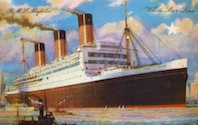
|
John
Masefield OM D Litt LL.D Litt D (1891-94)
John was born in Ledbury,
Herefordshire where the family solicitor's business continues to this
day. He was orphaned young and brought up by an aunt. It was aboard
the Conway that Masefield's love for story telling grew. While in the
ship, he listened to the stories told about sea lore. He continued to
read, and felt that he was to become a writer and storyteller himself.
After Conway he went to sea but to his great regret had to come ashore
– he suffered extreme seasickness. His poem Roadways explains
his calling for the sea.
After
many years in New York he returned to the UK. He served as a medical
orderly in the Great War even though old enough to be exempt from military
service. He became Poet Laureate in May 1930 and was judged to be "everyone's
poet and a poet's poet". He wrote many poems about the sea and a considerable
number of verses especially for the Conway including The Gulls, for
the masting of the new figurehead in 1938 and to commemorate the centenary
in 1959. The latter words were inscribed
on the lintel of the main entrance to the New Block. He wrote of his
Conway years in his book New Chum published in the UK and USA (see Bibliography);
and was her official historian producing two editions of The Conway
in 1933 and 1953. He was President of the Conway Club 1930 – 34.
He is interred in Poets' Corner in Westminster Abbey.
Poet Laureate: http://www.tallship.co.uk/tallship/august97/poet.htm
The Masefield Society, The Frith, Ledbury,
Herefordshire, HR8 1LW, UK. They hold a Masefield festival in the first
week of June in Ledbury, his birth place.
|
|
Lt Frank
Henry Mason RNVR RBA RI (1888-90)
Born
at Seaton Carew, County Durham in October 1876. It was during his time
as an engineer at sea after Conway that he discovered his interest in
painting. In order to devote more time to this subject he returned to
shore and, whilst engaged in engineering and shipbuilding at Leeds and
Hartlepool, he studied under Albert Strange at the Scarborough School
of Art. He travelled abroad extensively and painted many subjects in
watercolour. He was elected a Member of RBA in 1904 RI in 1929.
Exhibited at the RA from 1900 and achieved a prolific output of artwork
for the railways, designing many posters for the LNER, Great Western
and NER railways.. He became an official war artist during the First
World War whilst serving as a Lieutenant in the RNVR in th North Sea.
In the latter part of 1915, Mason commanded Motor Launch 33 in the Suez
Canal zone. Between the wars he painted many commissions for shipping
company especially Everards. During the Second World War he worked for
the Directorate of Camouflage, Naval Division. He was a prolific marine
painter and his love of the sea is reflected in both his oils and
watercolours. He specialised in subjects as diverse as commercial and
naval vessels throughout the world to yachting regattas. Wrote the book
Water Colour Painting with Fred Taylor. He continued to live in
Scarborough and London, and painted until his death in 1965.
|
|
Rear
Admiral RW Mayo RN CB CBE (1923-25)
When
he laft Conway Rear-Admiral Robin William Mayo failed to get into
Dartmouth and spent his first 12 years at sea with the Royal Mail Steam
Packet Company before joining the Navy in the late 1930s.
The
son of a farmer, Robert was born at Charminster, Dorset, on February 9
1909 and educated at Weymouth College and the training ship HMS Conway
on the Mersey. He first served in Royal Mail ships, carrying passengers
and cargo between Europe and the Americas.
In 1936 he had gained his master's ticket, and was loading chilled beef
for Britain when he received a signal from the Admiralty seeking
volunteers for the Royal Navy. Mayo had undergone training as a
midshipman in the Royal Naval Reserve in the battleship Ramillies and
the destroyer Venturous, and had qualified in submarines, but he was
considered too old for submarine service by 1938, and had to specialise
in anti-submarine warfare.
On
the outbreak of war he was in the submarine depot ship Medway in Hong
Kong, where he spent a year laying submarine detection equipment; he
also managed a hole in one at the Royal Hong Kong Golf club.
He
then became an anti-submarine training officer in Scotland before
receiving command of the sloop Aberdeen and seven ships of the 56th
Escort Group, based at Freetown, Sierra Leone. It was there that one of
his former ships, the 22,000-ton armed merchant cruiser Asturias, had
been torpedoed and beached. In June 1945 Mayo's force escorted the
refloated Asturias to Gibraltar, with orders not to drop depth charges
in case the underwater explosions weakened her bulkheads and sank her.
In 1947-48 Mayo commanded the destroyer Chevron on the Palestine
Patrol, intercepting illegal Jewish immigrants being landed in Israel.
In one incident Chevron and two other warships boxed in the refugee
ship Abril, boarded her, and sent the immigrants to Cyprus for
internment while they waited their turn in the quota queue. Mayo later
covered the withdrawal of British forces from Palestine.
During
the Korean War Mayo was executive officer of the carrier Theseus, in
which he claimed to have introduced the custom of forming up the ship's
company on the flight deck to spell out her name with their white caps.
He
became the first captain-in-charge, Clyde, where he oversaw the safe
arrival of the American nuclear Polaris submarines, and was appointed
CBE.
In
1961 Mayo took over as captain of HMS St Angelo on Malta. On his watch
the dockyard was handed over to private ownership, which led to his
being stoned by protesters; but he had sufficient diplomatic skills to
be asked to stay on as senior naval officer after the Flag Officer
left.
Mayo's last appointment was in Norway, as naval deputy to the Commander-in-Chief Allied Forces, Northern Europe.
He
retired with a CB in 1965. Determined not to take any paid employment
after leaving the Navy, Mayo split his time between Campbeltown and
Marlborough, until old age curtailed his travelling. He played a
prominent role in local affairs and sailed his boat Askomel round
Ireland. He also won prizes for the flowers, vegetables and shrubs from
his large garden in Wiltshire. Robin Mayo was the oldest admiral when
he died aged 98 on July 6 2007.
|
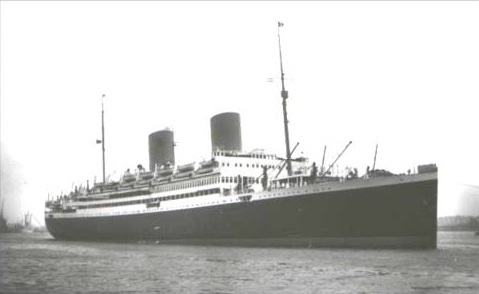
Above: Asturias Below Chevron
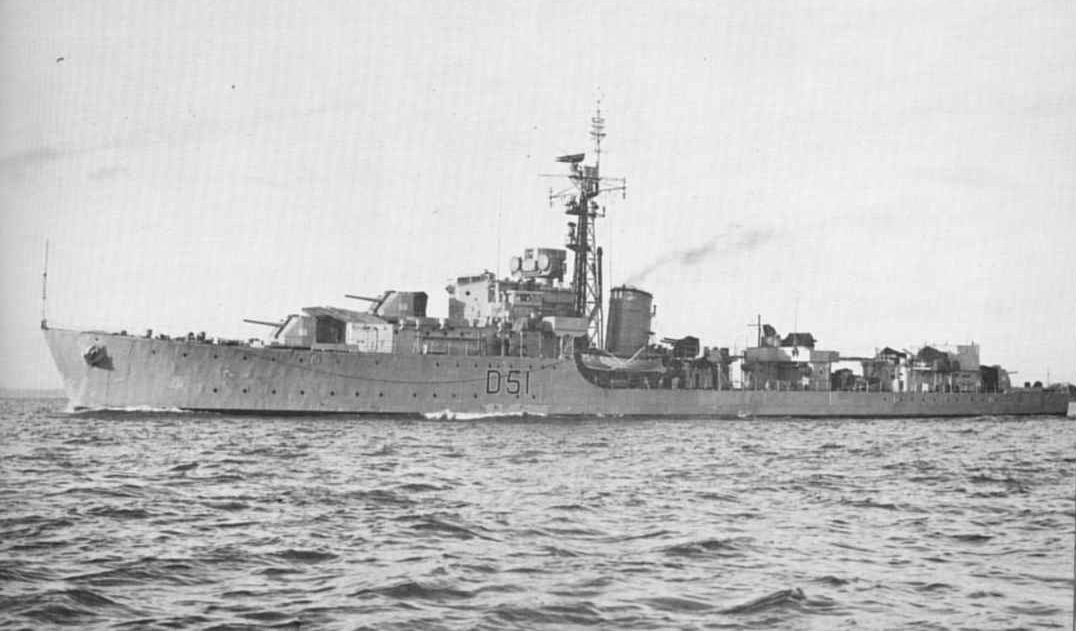
|
James Moody (1902-03)
14th
April 1912 was The Night To Remember. The unsinkable Titanic struck an
iceberg and sank with huge loss of life. The 6th Officer of the Titanic
was James Moody six years out of Conway. Doubtless he would have been
amazed at his good fortune to gain a berth in this, the most
prestigious liner in a most prestigious shipping company. He was on
watch on the bridge at the time of the sinking. He received the fateful
message from the lookouts that there was an iceberg ahead - he had
earlier told them to be on special lookout for them; and initiated the
first avoiding action. When it became clear that Titanic would founder
he was despatched with the other officers to organise the lifeboats.
5th officer Harold Godfrey Lowe had an encounter with Moody while they
filled boats 14 and 16. Lowe remarked that he had seen five boats
lowered, and one of the next two ought to have an officer. He suggested
Moody as the junior officer should go but Moody answered, “You go. I
will get in another boat” Lowe survived, Moody did not. Moody’s final
actions were recalled by Geoffrey Marcus in The Maiden Voyage. “Chief
Officer Wilde’s efforts to avert panic, maintain order and discipline,
and get the last of the boats loaded and lowered to the water were
valiantly supported by the youngest of the officers, James Moody. Long
before this, the latter should by rights have gone away in one of the
boats along with the other junior officers. But the seamen left on
board were all too few as it was for the work that had to be done.
Moody therefore stayed with the ship to the end and was the means of
saving many a life that would otherwise have been lost.” After
overseeing the safe loading of a number of lifeboats, he was last seen
alone on deck.
There is a rose marble memorial plaque
bearing James's name in the Church of St. Martin on the Hill, Scarborough.
It bears the verse:
'Be Thou Faithful Unto Death and I Will
Give to Thee a Crown of Life." There is also an altar set at St.
Augustine's Church in Grimsby that is memory of James.
There is an additional monument to James
Moody in Woodland cemetery, Scarborough, the existence of which was
known only to a few members of the Moody family. The headstone refers
to his role in the Titanic disaster, and commemorates Moody's sacrifice
with the words 'Greater love hath no man than this, that a man lay down
his life for his friends.' It was long forgotten but a recent article
in the Yorkshire Post (see Bibliography) highlighted the poor condition
of the memorial. It was badly overgrown and the commemorative cross
had been broken off.
There is a very complete life on http://www.encyclopedia-titanica.org
Please also see the Friends
of HMS Conway section for more information.
His
family donated the Moody Cup, a sailing cup to be competed for annually
by Conway cadets. It is on display in the Merseyside Maritime Museum at
Liverpool. Old Conways keep his memory alive as once a year it is
loaned to the Conway Club Sailing Association where it is awarded for
the best sailing log of the year.
|
|
Sqn Ldr 'Boy' Mould RAF DFC (approx
1930)
Pilot who shot down the first first Luftwaffe
aircraft to be shot down in France by Fighter Command in WWII. He was
killed in action off Malta on 1 October 1941
http://www.btinternet.com/~air_research/aarecent.htm
|
|
Henry Edward Joseph Horatio Nelson (1909-11)
Became the 7th Earl Nelson of Trafalgar.
|
|
Lieutenant
Philip Anthony Nedwill RN
(approx. 1932-5)
Philip was the son of William and Elsie
Nedwill of Cheadle Hulme. Philip was a regular naval officer and, when
in training, had been Chief Cadet Captain, at HMS Conway. The London
Gazette, 31 December 1940, confirmed that Philip had been Mentioned
in Despatches for earlier service. His promotion to Lieutenant with
effect from 1 April 1940 was not confirmed until after his death. By
1941, Philip had trained as a pilot and was part of the Fleet Air Arm
crew aboard HMS Sheffield. This was a cruiser involved in the sinking
of the Bismarck on 27 May. During the day, it was accidentally attacked
by friendly fire from aircraft flying from HMS Ark Royal. Only minor
damage was suffered, but it is possible that Philip was injured and
died two days later. He was 22. He is commemorated on the Lee-on-Solent
Memorial.
|
|
Bruce Norton (years not known)
Chelmsford-born Bruce could trace his ancestry
back to the time of William the Conqueror, his family coming from
South Creak in Norfolk, and once while looking at the brasses in its
parish church another visitor remarked that he could see a resemblance
to a bearded knight. He was educated at St John's School, Billericay,
and then he went to HMS Conway, where he trained to go to sea but decided
to stay on land. He ran the Musketeers Wine Bar in Coggeshall before
opening Langans
Brasserie with Peter Langan. Standing over six feet tall and sporting
a magnificent beard he was a gentle giant, one that customers - who
invariably became good friends - would pour out their troubles to, and
he never betrayed a confidence. Hailed as a "truly good man",
few, however, knew the extent of his kindness for he was also a private
and modest man. It was appropriate that he put his listening talents
for the greater good, and was a telephone Samaritan, acting as chairman
of its Colchester Branch. He was chairman of the Jean Norton Trust Fund
for children with learning difficulties, particularly dyslexia.
However, he hankered for the sea, and ran
his own small fleet of coasters between England and the continent, skippering
often. He also converted two Thames barges into homes for his family.
Bruce also ran a chandlers and boatyard at Heybridge Basin. He died in
2002.
|
|
Dennis Orme (1953-55)
At one time supreme leader of the Moonies
in Britain. Dennis was married in one of the first mass marriages to
include Western converts presided over by the Rev. Sun Myung Moon, then
a little-known Korean sect leader. Dennis later become the British director
of the Unification Church, and the English tabloids were full of exposes
about his "sinister sect.". He eventually became disillusioned and separated
from Moon and the sect.
http://www.rickross.com/reference/unif/Unif49.html
|
|
Admiral Sir Richard Peirse (1873-75)
Invented
the Gunnery Control System for the Royal Navy used in all capital ships
with large guns. he was C-in-C East Indies, during the First World War.
Father of Air Chief Marshall Sir Richard Pierse (1905-07).
http://www.geocities.com/dutcheastindies/peirse.html
|
|
Air
Chief Marshal Sir Richard Edmund Charles Peirse KCB DSO AFC (1905-07)
Educated
at Monkton Combe, Bath, HMS Conway and King's College, London. He was
the son of Admiral Sir Richard Peirse (1873-75). He was commissioned
into the RNR for service in the RFC Naval Wing and served with
distinction as a pilot during the First World War, seeing much action
along the Belgian coast, attacking submarine bases and winning the DSO
in 1915. In 1919 he was awarded the AFC and a permanent commission as
squadron leader in the RAF. He was later Deputy Director of Operations
and Intelligence.
From 1930 to 1933 he was AOC British Forces in
Palestine and Transjordan. He became Deputy Chief Of The Air Staff
between 1933-1936; before promotion to VCAS (1937-1940). He was made an
Air Vice-Marshal in 1936 and in the following year became Director of
Operations and Intelligence at the Air Ministry, and then Deputy Chief
of the Air Staff (from April 1940) this post was redesignated Vice-Chief
of the Air Staff). In 1939, Peirse was made an additional member of the
Air Council and promoted acting Air Marshal.
He
was appointed C-in-C Bomber
Command on 5 October 1940 to succeed Portal. During his tenure at High
Wycombe he presided over the painful transition from an
inadequately equipped bomber force into the heavy force that his
successor Sir Arthur Harris would take forward to victory. He oversaw
the introduction of the Stirling, Manchester and Halifax bombers. He
was in command during a very difficult period for Bomber Command that
saw heavy losses of aircrew and extreley inaccurate bombing. Air
reconaissance showed that less than 3% of bombs were hitting thier
targets. Indeeed 97% of bombs actually fell more than three miles from their targets.
This was entirely outside Pierse's control as the technilogies
available were incapable of the prcision bombing policy required. Late
in 1941 the War Cabinet and senior air staff ordered Peirse to change
to "area bombing' (aka "carpet bombing") with the express aim of
targetting Germany's civilan population and infrastrurure in order to
demoralise them. Pearce's formal repsonse is not known but within
a week of reciving the order to target civilians he was
transferred to
command the allied air forces in South East Asia. He was replacxed by
Bomber Harris who embraced the policy wholeheartedly.
He retired as an Air
Marshal in 1945. Sir Richard Peirse died on 6 August 1970, aged
seventy-seven.
|
|
Augustus Arthur Perceval (1868-70), (8th Earl Egmont, Viscount Perceval, Baron Arden, Lord Lovel & Holland)
He
"enjoyed a varied and romantic career" before inhertintg his titles. He
joined Conway from New Zealand and after training joined the White Star
Line. After qualifying as second mate he sailed before the mast as an
ordinary seaman. In 1881 he joined the Metropolitan Fire Brigade, and
in 1887 he left them and took up post as "Keeper of Chelsea Town Hall".
He was described as "amiable with a tendancy to put on flesh". However
when one meeting in the hall became rowdy he turned a fire hose on
innocent and guilty alike. He cleared the hall but lost his job (room
shown in image). A rich aunt gave him £8,000 to help him out but he
spent most of it on a banquet for the poor of the parish. He inherited
his titles in 1897, alongt with an estate in ireland and Cowdray Park
in Sussex.
|
|
Admiral
Sir Mark C T Pizey CBE CB DSO DL (1912-15)
He was one of the
Navy's finest destroyer Captains. He was mentioned twice in despatches
in 1941 and was awarded a DSO in 1942. That year he was awarded as bar
to his DSO. In 1951 he was appointed to be C-in-C of the Royal
Indian Navy and Chairman of the Indian Chiefs Of Staff. IN 1953 he was
appointed KBE and in 1957 GBE.His last appointment with the RN was as
C-in-C Plymouth.He was made an honorary Vice President of The Conway
Club in 1993 but died shortly threafter. He presented the gavel and
base used by the Club President.
|
|
Rear Admiral
Neil E. Rankin CB JP CBE (1955-58)
Born
24 December 1940 and raised in East Lothian, joined the Britannia Royal
Naval College in 1959, having previously been educated at Melville College,
Clifton Hall, North Berwick High School and HMS Conway. Qualified both
fixed and rotary wing pilot, a varied career ashore and afloat included
being the first Fleet Air Arm pilot to fly the Harrier aircraft, commands
of HMS Achilles, HMS Bacchante, HMS Andromeda, The Eighth Frigate Squadron
and HMS Ark Royal. Retired as Flag Officer Portsmouth, having also held
tri-Service command in the Falkland Islands as a Rear Admiral. Represented
the Royal Navy at rugby, sailing and golf. Since leaving the service
he was Chairman of Caledonian MacBrayne Ltd for three years between
1996 and 1999. He later became Chairman of Scottish Environment LINK. He is Chairman, The Royal Yacht Britannia Trust
|
|
Commander John L. Rigge RN OBE (1932-33)
He
lived a most extraordinary 70 year life fighting in the Spanish Civil
War and WWII. He was born in Shanghai and retired to Madrid in Spain.
His life was so full of incident it is easier to point you to his own
summary of his life for the Madrid Council Navy League which is here.
|
|
Gp Capt Basil Vernon Robinson DSO DFC RAF (28-29)
He
was 31 years old when he died after a short life, full of achievements
which are nothing short of remarkable. His name appears on both World
War 2 Honours and Memorial Boards.
After leaving
Conway in 1929 we must assume he went to sea but later he joined the
RAF as Acting Pilot Officer (Probationary). Obviously good at his job
he eventually achieved the rank of Group Captain, RAF. His bravery and
skills as a pilot, allied to leadership qualities in Bomber Command
were soon recognised with the award of a Distinguished Flying Cross in
1941, a Distinguished Service Order in January 1942 (for his part in a
raid on German naval units in Brest), and a Bar to his DFC in 1942; the
citation is a story of breathtaking skill and courage:
“One night in November, 1942, during an operational sortie against
Turin, this officer displayed great gallantry and determination when a
dangerous fire broke out in his aircraft. Owing to the intensity of the
flames and smoke which filled the cockpit, Wing Commander Robinson saw
no hope of bringing the fire under control, and therefore ordered his
crew to abandon the aircraft. While preparing to follow them himself,
the fire abated. Undeterred by the difficulty of the flight which
involved crossing the Alps and flying many hundreds of miles over enemy
occupied territory, Wing Commander Robinson continued alone, completed
the return journey, and landed his large 4-engined aircraft (a Halifax
bomber - Ed) successfully in this country despite very adverse weather,
accomplishing a most praiseworthy and skilful feat of airmanship.”
http://www.historyofwar.org/air/units/RAF/35_wwII.html
http://www.raf.mod.uk/bombercommand/h8gp.html . On 24th August 1943
Group
His luck finally ran out and he became one of the 3,700 Pathfinder air crew who lost their lives over Germany.
|
|
J C Kelly Rogers OBE FRAeS (1919-21)
In
April 1939 April an Old Conway, Captain Kelly-Rogers, a pilot with
Imperial Airways landed his flying boat Connemara on the Mersey and
moored next to the Ship. He had reported a “slight engine default” off
Holyhead and diverted to the safety of Liverpool where he was able to
effect running repairs; a pint of oil from Conway. This remarkable
co-incidence allowed a number of cadets to render assistance and be a
given a conducted tour before he was able to safely continue his
journey to Southampton. He had visited the Ship once before in 1932 in
a Southampton flying boat. He was a pioneering flying boat pilot. In
1937 he flew the first Empire flying boat service down the River Nile
to Kisumu on Lake Victoria. He then made the first night flight from
Kisumu to Durban, South Africa. His most daring exploit was the rescue
of the flying boat Corsair which had made a forced landing on the
narrow River Dangu in the North East corner of the Belgian Congo.
Corsair had been damaged in the landing and there was not enough clear
water for a safe take off. Many attempts were abandoned but it was
Kelly-Rogers who eventually got her airborne in 1940 and safely back to
Juba.
After the visit to
the Ship in April 1939 he piloted the first trans Atlantic flight by an
Empire flying boat, the Capella. Then on 5th August 1939 he piloted the
first ever trans Atlantic air mail flight. They had to carry so much fuel that
passengers could not be carried and loads were limited to mail. The
Foyles, Ireland to Botwood\, Newfoundland leg of the journey took over
19 hours!He piloted Winston Churchill across the Atlantic many times during the war. He finished his career in charge of Aer Lingus.
|
|
Sir Arthur Henry Rostron CBE KBE RD RNR (1885-6)
Arthur Rostron was
born in Astley Bridge, Bolton, England to James and Nancy Rostron. Educated
at the Bolton School from 1882 to 1883 and the Astley Bridge High School,
Rostron joined Conway at the age of thirteen. After two years of training,
he was apprenticed to the Waverley Line of Messrs, Williamson, Milligan.
He joined Cunard in 1895.
He is best known as the Master of Carpathia
and rescuer of nearly 700 Titanic survivors on the morning of April
15th 1912. As
the result of his efforts to reach the Titanic before it sank, and his
preparations for and conduct of the rescue of the survivors, Captain
Rostron was lionized as a hero. Rostron testified about the events the
night Titanic sank at both the U.S. Senate inquiry and the British Board
of Trade's inquiry into the disaster. Titanic survivors, including Margaret
Brown, presented Rostron with a silver cup and gold medal for his efforts
the night Titanic sank. He went on to become Master of Mauretania
and holder of the Blue Ribband for the west-east Atlantic crossing. After World
War I was appointed Knight Commander of the Order of the British Empire.
He was Commodore of the Cunard fleet before retiring in 1931. There is a very complete life on
http://www.encyclopedia-titanica.org (type Rostron in search box).
Captain Rostron is incorrectly stated in
many books to have been awarded the Congressional Medal of Honor. The
error is found even in works by American authors, whom one hopes would
be more familiar with their nation's highest military award. In fact,
Rostron was not eligible for the award, nor had he done anything worthy
of it. The Congressional Medal of Honor is reserved for persons of any
nationality serving in the armed forces of the United States. What Captain
Rostron received was a Congressional Gold Medal. This award dates from
1776 and the first recipient was George Washington. Each medal is awarded
by its own individual Act of Congress and must be ratified by the President.
Early medals were generally awarded for military valour, but after the
establishment of the Congressional Medal of Honor in 1865, the award
was extended to all manner of persons recognised as worthy. Recipients
are as varied as Thomas Edison, Walt Disney, Aaron Copland, Nelson Mandela
and Frank Sinatra. The medals are of solid gold and bear on the obverse
an image of the recipient. The reverse contains an image related to
the action that merited the award. Rostron's medal was designed by John
Flanagan, an American sculptor. Captain Rostron's award was proposed
in the Senate on 28 May 1912 and was approved by a Joint Resolution
of both Houses of Congress on 6 July. He was not the first British captain
to be so honoured. That distinction belongs to Captain Creighton, who
in 1866 was recognised for his role in the rescue of some 500 people
from the wreck of the American steamer San Francisco. By the time he
published his memoirs in 1931, Rostron was referring to his award as
the Congressional Medal of Honour (sic) and this is probably the origin
of the confusion. President William
Taft presented Sir Arthur's Gold medal on March 1st 1913 at the White
House. (Taft had lost the 1912 election but in those days the outgoing
President did not retire until March 4th).
Captain Rostron was also awarded the American
Cross of Honor. This decoration was given by the Society of the American
Cross of Honor, an organisation devoted to recognising bravery in the
saving of life in non-military situations. The medal was frequently
awarded for rescues at sea. There was also British involvement and the
gold version of the decoration was sometimes awarded on the recommendation
of the Royal National Lifeboat Institution. This is probably the reason
for the medal being presented to Captain Rostron at the British Embassy,
also on March 1st 1913. He
was also awarded a medal from the Liverpool Shipwreck and Humane Society
and a gold medal from the Shipwreck Society of New York.
|
|
Vice Admiral Sir C. W. Rawson Royds RN (1890-92)
Scott's
First Officer on the RMS Discovery during his first Antarctic
Expedition. Described as “miraculously expert in the use of the
microscope … a thorough seaman … musician … an agreeable and useful
member of the expedition”Cape Royds is named after him and is also the
location of Shakleton's hut. After a long Naval career he went on to
become Commissioner of the Metropolitan Police. There is a tablet to
his memory in Brompton Parish Church.
|
|
Kenneth Shoesmith RI (1906-08)
Kenneth was born
in Halifax in Yorkshire, grew up in Blackpool. Despite showing early
artistic talent he decided on a career at sea and became a Conway cadet.
After Conway he joined the Royal Mail Line but continued his enthusiasm
for drawing and painting. He was mainly self-taught but did take a correspondence
course early in his career. Like many artists his style changed considerably
during his life. In his early years he had a natural flowing style but
he developed a more 'Art Deco' style later. At some point he left the
sea and between the wars he worked for the publishers Thomas Forman.
They produced all  Cunard's postcards and Shoesmith created many very
well known images for them. He also designed posters for a number of
other companies including the Royal Mail Line.OCs
wil now him best for his illustration that graces the cover of Masefiled's
The Conway and for for his beautiful picture "The Training Ship
Conway at Rock Ferry, in the Mersey" He painted 1st War Honours Board which hangs in Birkenhead Priory. He
was prolific artist and his works
included several large pieces for the old Queen Mary, including an altarpiece,
The Madonna of the Atlantic for the Cabin Class Drawing Room (see left).
He also produced the screen of harbour scenes that covered the altarpiece
when the room was not in use as a chapel. These are still on display
in the Queen Mary at Long Beach, California. He was famous for
his marine posters advertising pre-war Trans-Atlantic Liners.His style
of representing ocean liners became instantly recognisable and is still
copied to this day. A collection of over 300 items of his work is in
the Ulster Museum, Belfast, Northern Ireland. Cunard's postcards and Shoesmith created many very
well known images for them. He also designed posters for a number of
other companies including the Royal Mail Line.OCs
wil now him best for his illustration that graces the cover of Masefiled's
The Conway and for for his beautiful picture "The Training Ship
Conway at Rock Ferry, in the Mersey" He painted 1st War Honours Board which hangs in Birkenhead Priory. He
was prolific artist and his works
included several large pieces for the old Queen Mary, including an altarpiece,
The Madonna of the Atlantic for the Cabin Class Drawing Room (see left).
He also produced the screen of harbour scenes that covered the altarpiece
when the room was not in use as a chapel. These are still on display
in the Queen Mary at Long Beach, California. He was famous for
his marine posters advertising pre-war Trans-Atlantic Liners.His style
of representing ocean liners became instantly recognisable and is still
copied to this day. A collection of over 300 items of his work is in
the Ulster Museum, Belfast, Northern Ireland.
There was an article in the Spring 2011 The Cadet. (To view it online Club members can click here and then choose Members Only)
There is a Shoesmith Society to promote his works which features his Conway work. Click here
A very interesting and well illustrated biograp[hy was published in 2011. £5 per copy is donated to The Friends of HMS Conway. Click here for details.
Examples of his Conway images are here
|
|
Lieutenant Commander Bernard M. Skinner (1930-32)
Lieutenant Commander Bernard Skinner was Amethyst's Commanding officer during the "Yangtse Incident" in 1957. Wounded in the initial attack and dying from his injuries a day later, he was posthumously mentioned in dispatches
|
|
Captain Christopher Smith QGM (1953-55)
Christopher
was one of the small group of cadets in the Ship when she grounded and
he was one of the first ashore in the doomed attempts to refloat her.
After Conway he served with a Dutch shipping line and then British
companies before joining the Royal Fleet Auxiliary (RFA) in 1961. He
obtained his master's ticket in 1965. As chief officer of the
helicopter support ship Engadine, he was awarded the Queen’s Gallantry
Medal for the decisive role he played in the salvage of a stricken
merchantman in the Channel during a gale in December 1981. The
4,000-tonne motor vessel Melpol was ablaze and drifting in gale-force
winds and heavy seas 35 miles southeast of the Isle of Wight. With the
fire raging unchecked, Smith and PO Olley were winched onboard from a
helicopter to assess whether she could be saved. Deciding she could
Smith led a team of volunteers back onboard. They had been able to
bring only limited fire fighting equipment with them. Below decks
Melpol had been reduced to a tangle of twisted metal, with ladders and
bulkheads melted in the intense heat. All electrical wiring had been
burnt through, so the team had to rely on their own portable light
sources. It took them almost eight hours to bring the blaze under
control, during which time they extinguished fires in the engine room
and accommodation areas. who after eight hours managed to extinguish
the blaze. They then connected tows to two salvage tugs enabling the
ship to be taken in tow and brought to safety. The official citation
read “Chief Officer Smith displayed courage, leadership and
professional skills of the highest order during this most difficult
operation and by his resourcefulness enabled the ship to be saved.”
Only four months later Engadine joined the Falklands task force as a
support ship for helicopters during the campaign to liberate the
islands from their Argentine occupiers. Engadine provided helicopter
maintenance and accommodation for ground crew in San Carlos Water
throughout the period of the intense Argentinean air attacks. In a
36-year career with the RFA Smith also saw service in many other
theatres of international conflict, including the Gulf, Malaysia and
Lebanon. He retired in 1997, eventually living in a 70 foot canal
narrow boat with his wife and a very raucous parrot. He died in 2007.
|
|
Captain David Smith RN (1942-44)
Patron of the Conway Club. Elder Brethen
of Trinity House, and former Warden and Chief Executive. Longest serving
Conway Club Committee Member, over 50 years. Longest serving President
of the Conway Club - over 10 years. Played a key role in securing major artefcats like the figurehead and bell.
He was aaldo the prime mover in the Trincomalee Trust
|
|
Lt Vincent Stephen RNAV (1867-68)
When
he left Conway he served and qualified as master in tea clippers before
transferring to steamers. He left the sea to be a tea planter in India
but the sea called him back. As well time at sea he was an excellent
electrical engineer. He worked with his half brother, Z de Ferranti in
the formation and development of the Ferranti business. And also
advised the London Electrical Supply Corporation and wrote two books on
electrical subjects. A man of many talents he was also a member of the
RNAV and while master of SS Drudge he conducted trials of the new
Sims-Edison torpedo (see image) at Spithead. In 1894 he was lost
overboard from Union Company’s SS Spartan (he was third officer) while
delirious from a severe attack of typhoid. He was just 40 years old.
|
|
Pilot Officer George Edward Bowes Stoney, RAF (1927-28)
A
hurrican pilot who lost his life during the Battle of Britain in August
1940. He had been a civil airline pilot before the war, probably after
a Short Service Commission. Before his final sortie he recorded a
graphic description of an action earlier in the battle.
Click below to hear his recording.
|
|
Captain Donald Stewart (1920s)
In 1944 he was on the Blue Funnel ship
Automedon when it was raided by the Atlantic and subsequently sunk.
After the other officers were killed he played a key part in trying
to stop the Germans finding important secret documents which ultimately
led to the bombing of Pearl Harbour. Details of his involvement are
well documented and it would appear that he was very brave.
http://www.forcez-survivors.org.uk/automedon.html
http://www.merchantnavyofficers.com/indexframe.html
|
|
Ken
Strange ( Conway approx. 1937-1939 )
At
seventeen, just before World War II Ken finished two years in Conway
and moved to the USA where the U.S. Navy sent him to officer's training
at Swarthmore. He shipped out on the USS Ranger, which patrolled the
North African coast, and, at 20, was made Chief Ordnance Officer on
the USS Intrepid. During his tour of duty, the Intrepid and its crew
survived a kamikaze attack in the South Pacific, returning on its own
to San Francisco for repairs. He returned from WWII a changed man. Though
he had physically survived the war, he was spiritually wounded. It was
his Uncle Earnest, who loved him like a son, who urged him to pursue
his art, above all else, or in spite of it. And so Ken applied and was
accepted into the Boston Museum School. Raoul Dufy and his explorations
of colour and line, were his greatest influence. His Seagulls painted
in 1964 will have a special resonance for OCs. A retrospective of his
life and works can be found here:
http://cedarkeynews.com/Arts+and+Entertainment/702.html
|
|
Gp. Capt. T. Q Studd DL DFC (1909-11)
His
achievements were very special being CCC, Gold Medallist, a
commissioned officer in all 3 services, the first person to fly from
North Wales to Ireland (his flying license number was # 50 in the RFC).
An interesting aside is that he taught Douglas Bader to fly !! He was
OC RAF North Weald from 1934 to 1937 when it was home to 56 Squadron
|
|
Captain L.J.Thompson (1939-41)
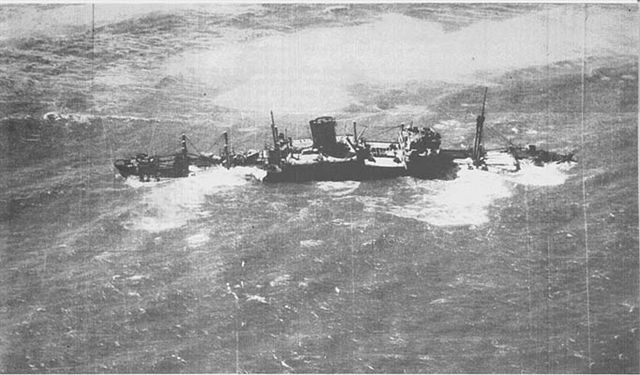
Bowman of the No 1 Motor Boat that rescued
the 45 crew from the s.s. Tacoma City which was blown up by a magnetic
mine near the Conway in March 1941. During his voyage at the age of
18 on the Blue Star m.v. Dunedin Star he was shipwrecked and rescued
from the notorious Skeleton Coast in SW Africa. These exploits are covered
in the book and film 'Skeleton Coast'. In 2000 he published his own
account of the adventure entitled 'The Loss of a Ship'. He served twice
as President of the Conway Club, between 1986-90 and 1992-96, and has
been chairman of the HMS Conway Trust from 1988 to 2005.
|
|
Captain John Thomas Walbran (1862 - 64)
John
Walbran was born in Ripon, Yorkshire on 23rd March 1848. He left Ripon
Grammar School at age 14 to become a Conway cadet at the same time
Captain Mowll was appointed as Captain Superintendent. He was in the
first group of cadets to complete their course fully under Mowll’s
command.
He
disappeared from the scene for 28 years, so little is known of the man
except a brief reminiscence by one of his officers; “There was nothing
pompous about the captain, he was a man of warmth and charm who was
welcomed wherever he went”. In 1892, after a lifetime at sea, he
assumed command of the Canadian government steamship Quadra and wrote
himself into Canadian history. For the next 12 years, he patrolled the
British Columbia coastline, making maps, servicing lighthouses,
searching for missing ships and erecting beacons. He quickly became
fascinated with local history, especially the origins of local place
names. In 1896 he began writing a book on the subject ‘British Columbia
Place Names (Their Origin And History)’. He researched existing print
and manuscript material, but above all he tracked down knowledgeable
locals and used his charm to coax anecdotal stories from them and
collect vital oral history before it was lost. His book was a seminal
work and made a distinctive contribution to the story of West Canada.
For a man so committed to place names and dedicated to British
Columbia, it is fitting that Walbran Park, Walbran Valley and Walbran
Creek were all named in his honour.
Captain
John T. Walbran produced a seminal work derived from his hobby of
investigating place names. It has been said that any captain worth his
salt on the B.C. coast travels with a well-thumbed copy of Walbran's
book British Columbia Coast Names.
His
first ship was the Bedfordshire. By 1881 he gained his master mariner's
certificate in Liverpool. He arrived in British Columbia (B.C.) in 1888
as the first officer of the Canadian Pacific Navigation Company’s S.S.
Islander. He took command of the S.S. Danube in 1890. It was soon
bought and renamed Salvor by the B.C. Salvage Company. In 1891, Walbran
joined the Canadian government's Department of Marine and Fisheries
concerned with lighthouses, buoys, etc. He was sent to Paisly, Scotland
for the building of the Quadra, a vessel he sailed to the West Coast
and commanded from 1891 to 1908. Although he was mainly inspecting
lighthouses and buoys, Walbran ran a tight ship in man-of-war fashion.
His civilian seamen wore 'sailor-rig' uniforms, he 'shipped' a long
sword, made sure his men were trained on 12 Martini-Henry rifles and
held roll call and church services every Sunday morning. He was also a
stipendiary magistrate. Walbran was well known as a storyteller and
amateur historian. In 1901 he researched and wrote an important article
about the first voyage of Captain Charles Barkley and his wife Frances
Barkley in 1787 was based on his access to Frances Barkley's sea diary,
a diary that has since disappeared. Specifically he makes clear how
Captain John Meares later took credit for some of the original
navigataional achievement of Captain Barkley, having had Barkley's
ship's journal in his possession. Walbran retired from government
service in 1903 and lived on the south side of James Bay where he
diligently researched his book which appeared in 1909. Walbran died at
age 64 in St. Joseph's Hospital, Victoria on 31st March 1913. He and
his wife are buried in Ross Bay Cemetery.
|
|
The Warwick Dynasty (1926-57)
The
Warwick family are another Conway dynasty with four family member
attending Conway over two generations. Brothers William (26-28) and
Norman (48-49), and William’s sons Eldon (55-56) and Ron (56-57). They
had a unique family connection with Cunard.
|
|
Capt W E 'Bil' Warwick
CBE RD RNR (1926-28) (note he insisted on Bil not
Bill) Commodore
WE ‘Bil’ Warwick CBE RD RNR (26-28), was junior cadet captain in Conway
at Rock Ferry. Close to the end of his course a representative from the
Mogul Line visited Conway to recruit apprentices to join a new ship
being built in Scotland. Bil applied and was accepted. His Discharge
Book shows him as joining the ship on the 25 October 1928 so he may
have had to leave Conway a bit earlier than usual. Interestingly, the
Discharge Book records him being signed on as a Junior Officer
throughout his time as an apprentice. He went to India on the ship and
did not return for several years having obtained his 2nd Mates and
First Mates tickets before doing so. Eventually he returned to the UK
and joined Cunard. He became master of the Queen Elizabeth and the
Queen Mary, and was the first master of the Queen Elizabeth 2 in 1968.
He later became the fourth Conway appointed as Commodore of Cunard in
1970 and retired in 1972.
Bil’s brother Norman Ralph Warwick (48-49) was in Conway for the final year at Bangor and the first term at Plas Newydd. He eventually went to sea in the Silver Line.
Bil’s son Eldon John Warwick (55-56)
also attended Conway joining the year after the Camp was opened. He
served his time with Brocklebanks and worked for several companies
before retiring in 1997 after serving in command for about 20 years.
|
|
Bil’s younger son Commodore Ronald ‘Ron’ Warwick OBE RNR LLD FNI (56-57)
was another Conway cadet. He first joined the Port Line and after
obtaining his Second Mate’s Certificate in 1961, he spent the next
several years sailing with various companies to gain experience of
different types of ships. In 1967, he became chief officer of a cargo
ship and by 1968 he had obtained his master’s ticket. He joined Cunard
as a third officer in 1970. For one brief day in 1970 they both served
in Queen Elizabeth 2 as she was moved in Southampton harbour. He was
chief officer when Queen Elizabeth 2 was requisitioned by the
government for service in the Falklands campaign and holds the rank of
captain in the RNR. Ron first sailed as captain in 1986 in Cunard
Princess, and also sailed in command of the Cunard Countess and Cunard
Crown Dynasty before his appointment as master of Queen Elizabeth 2 in
July 1990. He was the first captain of the new Queen Mary 2 and the
fifth Conway Commodore of Cunard from 2003 to 2006 when he retired with
36 years of company service. Ron describes an encounter with a large
wave during very bad weather in 1995 en route to New York in Queen
Elizabeth 2. “The wind speed was recorded well over 100 knots … We were
hove to and riding out 30-40 foot waves. It was a dark night … The sea
was nearly white with foam and driving spray lashing the ship. The
rogue wave was sighted right ahead looming out of the darkness and it
looked like we were heading straight for the white cliffs of Dover. The
wave seemed to take ages to reach us … it broke with tremendous force
on the bow. An incredible shudder went through the ship followed a few
moments later by two smaller shudders. The QII withstood the wrath of
the ocean despite hundreds of tons of water landing on the bow. There
was some superficial damage such as bent railings and buckled deck
plating. No passengers or crew were injured. It can be quite difficult
to gauge wave height but in this case the crest of the wave was more or
less level with our line of sight on the bridge … 95 feet above the sea
surface. This was the largest wave that I have ever encountered and I
cannot begin to imagine what effect it would have had on a smaller
vessel!” Canadian weather buoys nearby confirmed the wave’s height as
98 feet.
|
|
The Watts Dynasty (1949-58)
Ian Douglas Watts, (1949 - 1950), Ian was one of the cadets on the ship for the 49 transit.
Malcolm Douglas Watts (1949 - 1952),
Andrew Douglas Watts (1955 - 1958).
|
|
Capt. Matthew 'Chummy'
Webb (1860-62) 
After Conway he served a three-
year apprenticeship with Rathbone Brothers of Liverpool. Whilst serving
as second mate on the Cunard ship 'Russia', travelling from New York
to Liverpool, he attempted to rescue a man overboard by diving into
the sea in mid-Atlantic. The man was never found, but Webb's daring
won him an award of £100 and the first Stanhope Gold Medal ever awarded by The Royal Humane Society, and made
him a hero of the British press.
In 1873 Webb was serving as
captain of the steamship 'Emerald' when he read an account of the failed
attempt by J. B. Johnson to swim the English Channel. He became inspired
to try himself, and left his job to begin training, first at Lambeth
Baths, then in the cold waters of the Thames and the English Channel.First
man to swim the Channel from England to France. The route from France
to England had much more favourable tides and so had been swum many
times. Webb's route was much more difficult. It is estimated that with
tidal drift he swam approximately 50 miles. He swam in his red Conway
bathing shorts. After many other long distance races and endurance swims
over many years he died attempting to swim the rapids below Niagara
Falls. In Conway he was regarded as a long distance or endurance swimmer
rather than a racer. The Captain Webb Memorial Shield (for swimming)
was competed for annually by cadets, see Relics section. John Betjeman wrote a poem in his memory The Shropshire Lad
http://www.shropshiremining.org.uk/captwebb.shtml
http://www.bostonharborheritage.org/articles/webb.htm
|
|
Sir Clive R Woodward (1969-74)
Now coach of the
England Rugby Union team, previously an international rugby player.
He was awarded the OBE in June 2003. He was knighted in 2004 for his
services to rugby after England won the rugby World Cup. A summary of
his career is here.
http://www.independent.co.uk/news/Sport/Rugby_Union/2000-03/woodward270300.shtml
|
|
Vice Admiral Sir Peter
Woodhead (1954-57)
Vice Admiral Sir Peter Woodhead served in the Royal Navy until 1994
including 15 years as a Fleet Air Arm pilot, command of four ships and
the appointment of Chief of Staff to the Joint Service Commander of
the Falklands Task Force during the 182 conflict. Subsequently he served
as a Squadron Commander, Director of Naval Operations, Captain of an
Aircraft Carrier and, as an Admiral, commanded both the 1st and 2nd
Flotillas. His final appontment in the Navy was as the Deputy Supreme
Allied Commander Atlantic. On leaving the Navy he was appointed as the
first Prisons Ombudsman from 1994 to 2000. He is currently Deputy Chairman
of a Technology Company, a member of the Security Vetting Appeals Panel
at the Cabinet Office, a Lay Preacher and is involved in eight charities
primarily in the field of Crime Reduction and Homelessness. He was appointed
to the Armed Forces' Pay Review Body in 2002.
|
|
Back to Top
International
Sportsmen
This section is a bit thin. I'm sure there are more than this so please let me know who they are.
John Bligh (1966-69) Rugby (schoolboy), England.
D G Chapman (1922-24) Represented
Great Britain in the 4 by 400 m at the 1928 Amsterdam Olympics.
Walter Elliot MP (23-26)
Seven Rugby internationals for England between 1932 and 34.
E A Hamilton Hill (23-25) Rugby, England.
Jay ‘Birdie’ Hooper
(1958-61) was a Maintopman, a talented sailor and a stalwart of the
sailing group. He eventually represented Bermuda in the 1964 Tokyo and the 1968 Mexico City
Olympics.
G Matveieff (15-19) Olympic spring board diver in 1924
Dai Phillips (1968-71) Rugby, Wales.
Arthur Tudor Young (15-16)
Born 14th October 1901 in Darejeling, India. Educated at
Tonbridge School, HMS Conway and Caius College, Cambridge. He was a
regular Army officer, and died at the age of 31 while serving as
A.D.C. to the G.O.C. Eastern Command, India. He played Scrum Half for
the RFU 54 times during the period 1924 to 1929. HIs debut match was
Wales v England at Swansea on Jan 19 1924. He scored 6 tries.
Sir Clive Woodward (1969-74) Rugby, England.
Clive
Woodward
Written
by Hugh Godwin (tel: 07968 392688) of the Independent on Sunday for
the
December 2003 issue of International Rugby News magazine.
Clive
Woodward's road to success has not always been smooth. It might have
led to a life in uniform, but almost from the off a love of sport and
the application to it of business techniques have combined to sweep
England's coach to World Cup glory.
The
Early Days
Woodward's
father was an RAF pilot, and while the family were stationed in Linton-on-Ouse
near York, 10-year-old Clive watched on TV as Bobby Moore lifted the
football World Cup at Wembley and attended York City matches at Bootham
Crescent. But at 13 he went to HMS Conway on Anglesey, a boarding school
originally intended to turn out members of the merchant navy. There,
young Clive not only got into the athletics team but switched from round
ball to oval and played alongside a fly-half called Iain Duncan-Smith
in the school's first XV.
Chris
Plummer, another old 'Conway Cadet', told IRN: "Clive was immensely
talented as a sportsman. I am a couple of years older, and when I was
20 I remember telling one of our committee at Birkenhead Park, and a
member of the RFU Committee, that he should look out for this lad. He
was suitably unimpressed! Clive certainly did not need any assistance
from me to further his rugby credentials. "He played in the Conway
1st XV when in the fifth form in 1972 and obviously right through the
sixth. As 'Dunc' (later to be known as IDS) was
the
stand-off he [Woodward] was a centre or generally able to play anywhere
in the backs - a very good kicker. "He was a good all-rounder and
well able to get on with the senior cadets. I can quite see the Conway
training in his approach to leadership." The motto of the school
was 'Quit ye like men, be strong'.
Exams,
England and Emigration
On
leaving school Woodward attended Loughborough University, where he gained
a Bachelor of Arts degree in Sports Science followed by a Post-Graduate
Certificate of Education. "Teaching...is in my blood," he
said in 2003.
From
university Woodward joined Rank Xerox and began playing for Leicester.
His England debut was as a replacement against
Ireland in 1980 (Jonny Wilkinson would follow suit 18 years later),
and he won 21 caps up to 1984, including 14 in the centres alongside
Tigers club-mate Paul Dodge. Woodward toured with the Lions in 1980
(playing two Tests, one at wing, one at centre) and 1983.
He
left Xerox in 1985 at the age of 29 and emigrated to Australia with
his second wife Jayne Betts. There he was offered the post of national
sales director for Portfolio Leasing, a subsidiary of the Ford Motor
Company. He played for the Sydney Premier Grade side, Manly, and enjoyed
the less confined rugby lifestyle, albeit that he broke his jaw in a
derby match against fierce rivals Warringah. "He was a good guy
and a good rugby player," Manly's then coach, Rob Lane, recently
told the Evening Standard, "but I bet he's still not much of a
[surf] board rider."
On
Board as a Coach
Returning
to the UK in 1990, Woodward established his own leasing company, Sales
Finance Ltd. Business and rugby were moving closer together - he was
a man of his times. Having broken his leg twice while playing, Woodward
turned his attention to coaching.
The
Henley RFC website records: "Henley's fortunes stood still until
Woodward became the first team coach in 1990. His introduction of the
'flat ball' philosophy was a pioneering event for British rugby and
not only brought promotion in 1992 but captured the imagination of English
rugby. As a result Henley gained a further promotion in 1994 to the
National Leagues and after Woodward departed to coach London Irish,
Henley won two further promotions in 1997-98 and 1998-99."
Over
at Sunbury, the Irish also began playing more attractive rugby, though
Woodward never quite immersed himself in the Exiles' easy-going philosophy.
Kieron McCarthy, Irish's long-serving team secretary, recalled a fabulous
weekend of carousing in France: "I think Clive actually smiled
about six times". Woodward himself would joke after the World Cup
win: "I ought to be knighted for coaching London Irish for three
years!"
Next
stop was Bath, and a short spell as a 'consultant' coach, which ended
in August 1997 when Woodward was asked to become the first ever full
time England coach, in succession to Jack Rowell.
He
encountered an amateur way of doing things that had been partially eroded
by previous manager Geoff Cooke, but needed more work yet. The epitome
of the conflict between full-time players and part-time administration
was the June 1998 'Tour of Hell'. A club v country conflict was inevitable.
But under trying circumstances, Woodward proved himself a man of action.
In Cape Town, before the inevitable fourth Test defeat out of four,
he marched his squad out of the Holiday Inn hotel and into the Mount
Nelson, booking 20 rooms on his personal credit card.
Spring
1999 brought wins over Scotland, Ireland and France to set up a Grand
Slam. Against Wales at Wembley England raced to three tries by Dan Luger,
Steve Hanley and Richard Hill, but Shane Howarth and, famously, Scott
Gibbs crossed for Wales in a 32-31 upset. In the World Cup in the autumn
England lost both the important matches, against New Zealand at Twickenham,
and South Africa in Paris.
Strike-breaker
Takes on the World
So
the southern hemisphere's grip over England was as strong as ever. But
Woodward had other ideas, some of them gained from an unlikely source.
On his personal website - 'Clive Woodward's Winning' - the coach explained:
"One of the keys to my success came from...a self-confessed 'crazy
dentist' from Australia, Dr Paddi Lund".
Lund
replaced his reception desk with a caf? bar and espresso machine. The
patients' waiting room was abandoned in favour of personal lounges,
with tea served on Royal Doulton china. England players became used
to similar treatment when the team abandoned Bisham Abbey for their
preparations in favour of the five-star Pennyhill Park hotel in Surrey.
Woodward had two training pitches and a bespoke fitness room installed.
All England players were given a laptop computer to receive the coach's
frequent e-mails. Yet the close-knit harmony that would become a feature
of the World Cup victory was almost obliterated in November 2000. England's
players, seeking a better deal over match fees and image rights, threatened
to go on strike. Woodward confronted his players and promised to field
a second division team against Argentina if necessary. There were stories
that younger squad members received 'back down or never play again'
messages on their mobile phones. The strike was off.
Woodward
banished Phil Greening to Sevens after losing the 2001 Grand Slam in
Dublin, and Richard Cockerill all together when the Leicester hooker
wrote a stingingly critical book. Not a word against Woodward has been
seen in print since.
By
June 2002, though another Slam had gone west in France, Woodward was
awarded an OBE in the Queen's Birthday Honours. He won a concession
of sorts with the still recalcitrant clubs by gaining 20 training days
for England in the 2002-03 season. The World Cup build-up, estimated
to cost anything up to ?30m, was under way.
Woodward
kept innovating. He could not push through a new 'all-in-one' body suit
for the World Cup, settling instead for the skin-tight Nike jerseys.
The players were told to change their kit at half-time to concentrate
minds for the second half. In the Twickenham dressing rooms an all-English
haven was decorated with stirring slogans on the walls next to individual
nameplates in oak.
In
July 2003, now with a full squad, England went to New Zealand and Australia
and won. Woodward agreed a four-year extension to his RFU contract.
Next was the World Cup - and history made.
The
Legacy
Though
referred to as coach, Woodward is more of a manager or facilitator,
giving the most important people - the players - the best chance of
achieving their potential. Fools are not suffered, gladly or otherwise.
Already the Lions chairman, Bill Beaumont, has said he wants his old
England team-mate to lead the tour to New Zealand in 2005. Woodward's
style of play? There was a brashness about England between 1999 and
2001, yet the Grand Slam was elusive. A more pragmatic approach marked
the team of 2002 and 2003, and it won them the World Cup. England always
had the most players, the most cash and, albeit largely untapped, the
natural work ethic to become dominant worldwide. It could be argued
that any coach with common sense and the backing of the RFU could have
improved the bad old ways of England selection and preparation. The
bald fact is that Clive Woodward made it happen.
Back
to Top
|
|